
Real estate purchasing power forecast to continue declining
High interest rates and large supply are forcing many developers to launch stimulus policies, while buyers remain cautious.
According to a recently released industry report, MB Securities (MBS) forecasts that the real estate market will remain gloomy from now until the end of the year due to rising borrowing cost pressure amid large supply.
Specifically, the second quarter recorded a sharp increase in home loan interest rates as deposit rates at banks rose by 1-1.5% compared to the previous quarter. Currently, real estate lending rates have reached 13-14% per year, up about 2% year-on-year. In this context, many developers have introduced support policies such as fixing interest rates at 7-8% for the first two years at some newly launched projects in Hanoi, Quang Ninh, and Ho Chi Minh City to ease the impact of borrowing costs.
Nevertheless, MBS Research assesses that liquidity remains unfavorable as most investors worry that interest rates may stay high for a long time. The securities firm surveyed transaction prices at several apartment projects and found they had decreased by about 5% compared to the first quarter. In Hanoi alone, the housing market also recorded slow transactions and adjusted selling prices against the backdrop of the capital announcing its 100-year master plan.
Similarly, real estate services firm OneHousing stated that real estate market liquidity showed signs of slowing down in the first half of this year. The average absorption rate of primary projects reached about 50-60%, a sharp decline from over 80% in the same period last year. Mr. Tran Quang Trung, Business Development Director of OneHousing, noted that the decline in liquidity does not mean cash flow is leaving the market. According to him, buyers have not lost their demand for property; rather, they are becoming more cautious and selective in their decision-making process.

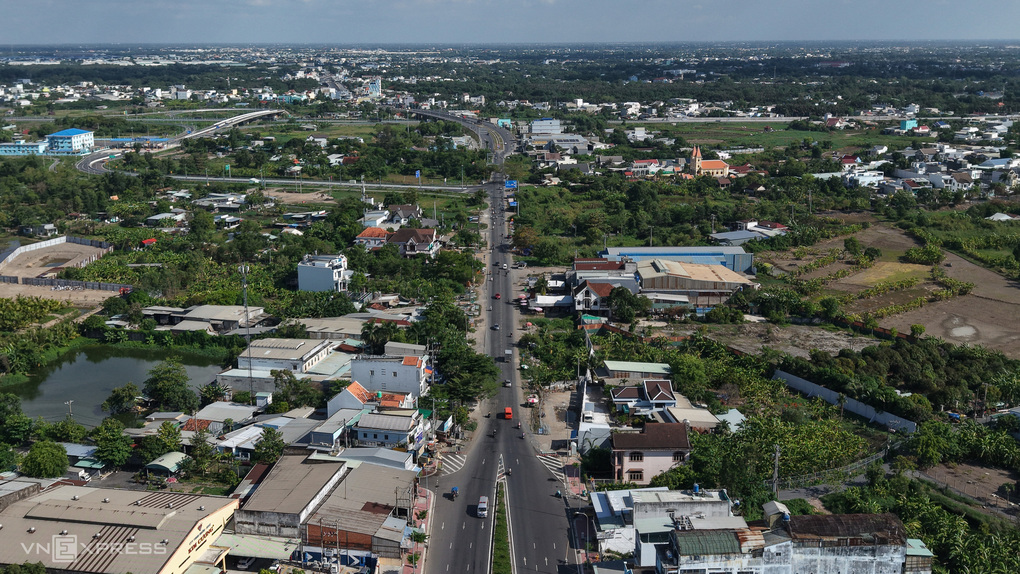
Real estate in central Hanoi. Photo: Ngoc Thanh
Real estate in central Hanoi. Photo: Ngoc Thanh
Sharing this view, Mr. Nguyen Chi Thanh, Vice President of the Vietnam Association of Realtors (VARS), said that in the previous period, when the housing market was constantly overheating, demand was concentrated on flippers using high financial leverage. Currently, this group has felt the pain of high interest rates and is showing signs of rushing to sell off their properties. Meanwhile, end-users remain cautious, waiting for price adjustments as current price levels exceed their affordability.
“Large supply combined with interest rate pressure will cause the market to operate in a more selective manner in the near future, with the advantage belonging to real buyers,” he said.
A quick survey by VnExpress of more than 1,600 readers regarding their home-buying intentions in the second half of the year showed that nearly 40% of participants postponed their buying plans to wait for a price drop. About 23% of readers shared their intention to move back to their hometowns because they could not afford to buy.
Against the backdrop of declining liquidity, developers are becoming increasingly cautious about launching new sales. Mr. Nguyen Quoc Cuong, General Director of Quoc Cuong Gia Lai, stated at the annual general meeting of shareholders in late June that 2026 will continue to be a challenging period for the real estate market. He observed that purchasing power is still weak, interest rates tend to rise, while supply is abundant and products are diverse after the legal bottlenecks of numerous projects were resolved.
“The absorption rate of real estate products in Ho Chi Minh City in particular and the country in general is relatively low, while prices are still anchored at very high levels,” he said, adding that he does not see any opportunities this year.
Mr. Doan Van Binh, Chairman of CEO Group, also assessed that the difficulties in the 2026 real estate market are greater than in 2025. Since the beginning of this year, everything has started to reverse, cash flow into real estate has tightened, and interest rates have remained high. This affects real estate developers and all market participants.
MBS Research stated that the second-quarter business results of several listed enterprises mainly came from previously deployed projects. The unit forecasts that many real estate companies will see a decline in profits in the second quarter, such as Nam Long decreasing by 19%, Khang Dien by 15%, and Dat Xanh dropping by 14%.
To increase competitiveness, experts suggest that developers need to adjust their strategies, focusing resources on highly liquid markets or projects with completed legal procedures. Mr. Doan Van Binh shared that his own company is expanding into the industrial real estate sector and prioritizing the development of projects of appropriate scale. In the coming time, the market still harbors many challenges, requiring businesses to be cautious in operations and risk management.







Leave a Reply