
The Government has proposed allowing Ho Chi Minh City to flexibly convert between commercial, social, and resettlement housing to meet the actual needs of residents.
This is a key proposal in the draft Urban Development Law presented by the Government to the National Assembly Standing Committee on the morning of July 28. Accordingly, the city could be granted the authority to allocate, lease, and permit land-use conversion for social and rental housing projects in accordance with planning, without requiring investment policy approval.
The Government also proposed allowing Ho Chi Minh City to self-determine the conversion back and forth between social, resettlement, and commercial housing, as well as the functionality of public-property housing to meet usage demands and resolve urban development bottlenecks.
In the draft law appraisal documents, the drafting agency stated that the development of social housing, renovation of old apartment buildings, and relocation of canal-side houses in major cities have been slow due to a lack of mechanisms. Notably, preferential policies for Transit-Oriented Development (TOD), social housing, and rental housing are still lacking. Therefore, delegating authority to Ho Chi Minh City to proactively and flexibly convert between housing types aims to meet the actual housing needs of the people.
Under the draft law, the city would also be allowed to designate developers for social housing, rental housing, and worker accommodation built on state-managed land or other land aligned with planning. Households and individuals whose land is reclaimed can purchase or rent-purchase social housing without going through a lottery draw, and they do not need to meet housing and income requirements.
For individuals whose land is reclaimed and who are resettled in social housing in the area, the city may allow them to resell the housing under market mechanisms as soon as they complete their payments.
Meanwhile, the draft law also adds a series of incentives regarding investment, construction, maintenance, and operation to develop social housing, worker accommodation, official residences, and other policy housing segments.
In fact, the mechanism for flexible conversion between commercial, social, and resettlement housing was previously approved by the National Assembly in the Capital Law (amended). In May, Hanoi planned to convert social housing units that remain unsold after one year, or resettlement housing left vacant for at least 9 months, into commercial housing. The maximum conversion rate for social housing is 20% for each project.

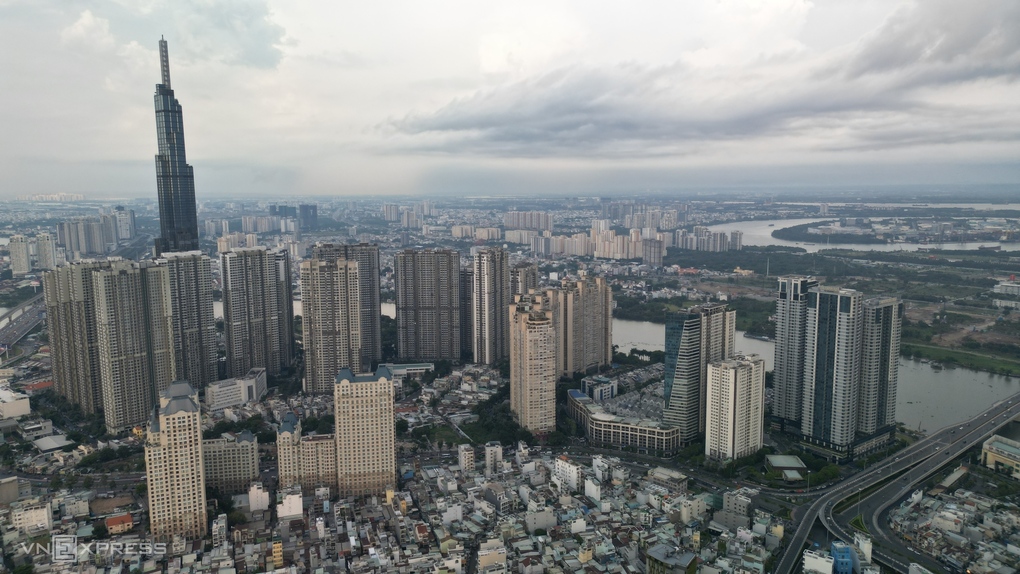
Apartment buildings and high-rises along Nguyen Huu Canh Street, Thanh My Tây Ward, Ho Chi Minh City. Photo: Dinh Van
Apartment buildings and high-rises along Nguyen Huu Canh Street, Thanh My Tây Ward, Ho Chi Minh City. Photo: Dinh Van
Ho Chi Minh City is assigned the largest social housing development target in the country, with 199,400 units by 2030. Specifically, during the 2026-2030 period, the city needs to complete more than 181,000 units.
Since the beginning of the year, the city has commenced construction on 9 social housing projects with nearly 11,000 apartments. The locality has 19 projects under construction, providing about 19,000 apartments. In the third quarter, the city expects to start construction on an additional 59 projects with nearly 54,900 units, which are scheduled for completion by 2027.


Leave a Reply