
A wave of opposition to property taxes is spreading across the US as homeowners grow frustrated with rising home values driving up their tax bills.
In Florida, property tax revenue has increased by more than 40% over the past three years, rising faster than population growth and inflation. Tax pressure has left some politicians dissatisfied. “People should not be permanent renters from the government,” said Hector Roos, Chairman of the Libertarian Party of Miami-Dade County.
Governor Ron DeSantis proposed a referendum on completely eliminating property taxes. However, the legislature only approved a plan to increase the homestead exemption limit for primary residences from $50,000 to $250,000 by 2028.
At the same time, it reduces the cap on annual assessment increases for rental buildings and commercial properties from 10% to 5%. However, this initiative must be approved by 60% of Florida voters in a referendum this coming November.

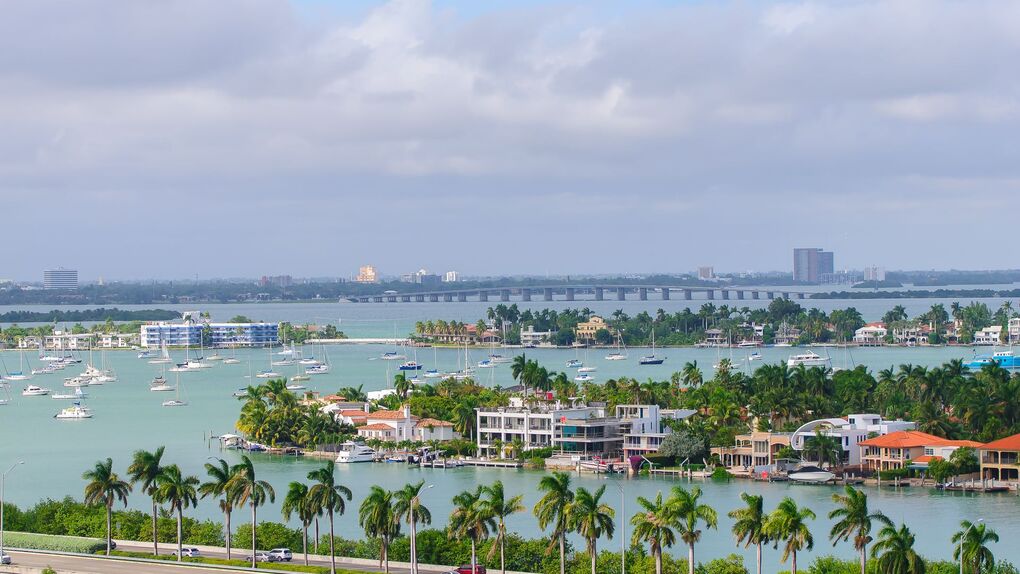
A corner of Miami, Florida. Photo: Pexels
A corner of Miami, Florida. Photo: Pexels
According to the Tax Foundation research organization, property taxes are the primary tool, accounting for up to 70% of total local government tax revenue in the US in fiscal year 2023. This tax rate ranges on average from 0.29% to 1.88% of property value, depending on the state. For example, in Florida, the average property tax is 0.78%.
Property taxes are built on the principle of “those who benefit pay.” This is because this revenue is used to fund schools, roads, police forces, fire services, emergency medical services, and other community services.
According to CNN, Florida is the epicenter of the largest wave of property tax opposition in the country since the 1970s. The reason is that property values have surged by nearly 27% since 2020, driving tax bills higher and higher.
“This is a tax that is very easy to target for criticism, even though it has existed in American history for a long time,” noted David Schleicher, a professor of real estate and urban law at Yale University. According to him, people are frustrated with property taxes because they cannot directly feel the increase in their home’s value while having to pay increasingly higher taxes.
According to the National Association of Counties, 34 states have passed property tax reforms between 2020 and 2025. Ohio, Indiana, and Wyoming finalized property tax cuts last year. Texas Governor Greg Abbott proposed eliminating property tax revenues used to fund schools and using the state budget surplus to make up for the shortfall.
Counties in North Dakota and Ohio have also gathered signatures for proposed state constitutional amendments to completely eliminate property taxes. “We are seeing a new rebellion against property taxes,” said Jared Walczak, a senior fellow at the Tax Foundation.
However, eliminating or reducing property taxes also creates budget disadvantages for local governments, according to experts. Florida has no personal income tax, so cities and towns in the state rely primarily on property taxes and sales taxes to fund public services.
Because sales tax revenue fluctuates, property taxes help stabilize local budgets. According to the Florida Association of Counties, if the proposed amendment is approved, counties in the state will lose about $3.6 billion in revenue in 2027 and $6.4 billion in 2028.
Wealthy coastal areas like Palm Beach or Miami could offset this by increasing taxes on high-end vacation homes. However, in many inland areas, there are very few properties valued above $250,000, and corporate tax collection is also limited.
Nearly half of Florida’s 67 counties are currently classified as having “limited financial capacity” and are receiving state budget support. “Now they are making every locality a place of ‘limited financial capacity,'” said Megan Sladek, Mayor of Oviedo, a suburb of Orlando.
Some local governments facing budget shortfalls warn that reducing property tax revenue will tie their hands in funding public services, forcing them to cut back or consolidate operations. Other governments may try to compensate by raising taxes on renters, businesses, or second-home owners. “It will create a crazy domino effect with a host of unintended and troublesome consequences,” Sladek said.
Anh Ky (according to CNN)







Leave a Reply