
Infrastructure expands development space in Ho Chi Minh City’s western gateway
The progress of ring roads and inter-provincial expressways contributes to expanding urban space, while creating favorable conditions for the western gateway of Ho Chi Minh City to attract new supply and demand.
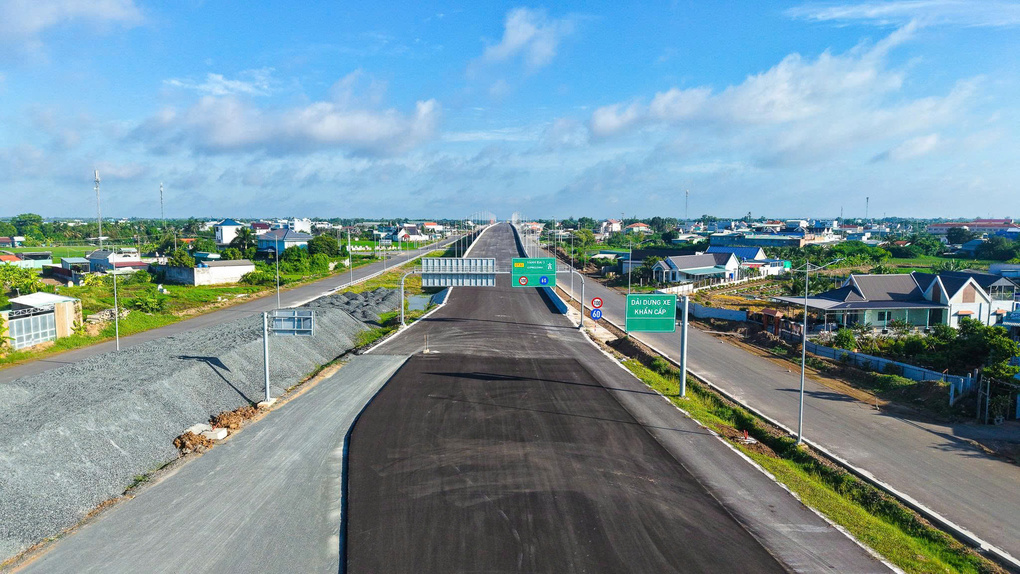
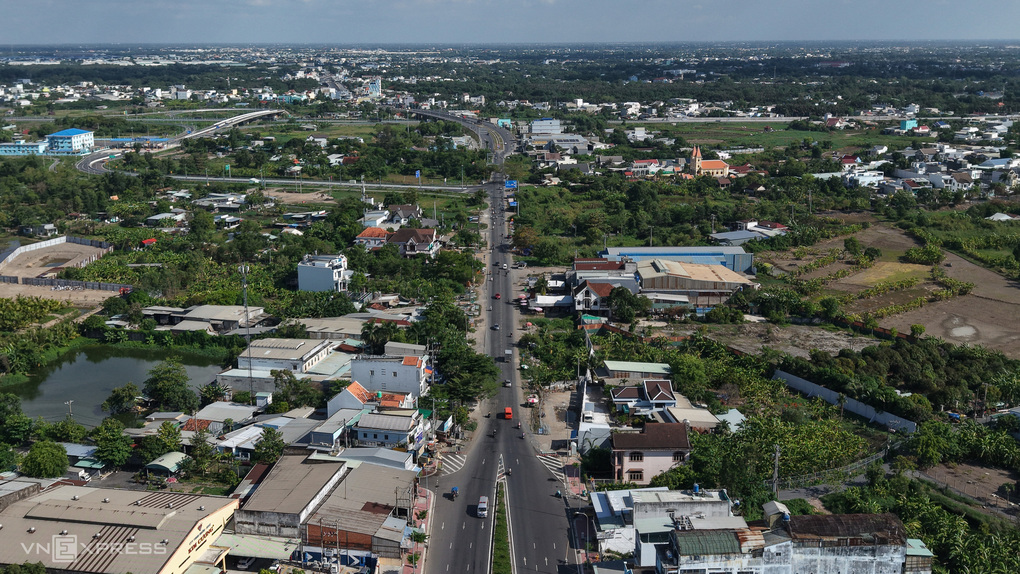
Ho Chi Minh City Ring Road 3 – a 76.34 km ring road with 8 lanes and a design speed of 100 km/h, has currently reached about 75% of construction volume. According to the plan, the project will open 38.6 km to traffic by the end of September and complete the entire route by the end of this year. Many items, such as noise barrier systems and porous asphalt surfaces, are also being deployed on the route for the first time.

The construction site of Ho Chi Minh City Ring Road 3 is accelerating its progress with road surface completion works. Photo: BIM Land
The construction site of Ho Chi Minh City Ring Road 3 is accelerating its progress with road surface completion works. Photo: BIM Land
On the East-West axis, the Ben Luc – Long Thanh expressway is nearing completion and is expected to open to traffic entirely in September. Along with the gradual implementation of Ring Road 4, key transport routes are gradually forming an inter-regional connection network at the western gateway of Ho Chi Minh City.
Within this network, the My Yen intersection is one of the key connection hubs between the Ho Chi Minh City – Trung Luong expressway, the Ben Luc – Long Thanh expressway, and Ho Chi Minh City Ring Road 3. Upon completion, the project is expected to enhance connectivity and expand development space at the western gateway of Ho Chi Minh City.

The My Yen intersection is accelerating construction in sync with the progress of the Ben Luc – Long Thanh expressway and Ho Chi Minh City Ring Road 3. Photo: BIM Land
The My Yen intersection is accelerating construction in sync with the progress of the Ben Luc – Long Thanh expressway and Ho Chi Minh City Ring Road 3. Photo: BIM Land
Located at the intersection of key infrastructure axes, Ben Luc is considered one of the areas directly benefiting as the inter-regional connection network is gradually completed, becoming a hub to welcome shifts in population, commerce, and investment in the western region of Ho Chi Minh City.
Infrastructure movements are also starting to reflect in the market. According to the Real Estate Highlights in Western HCMC report by Batdongsan, interest in real estate in Ben Luc increased by 40% in 2025, higher than Duc Hoa (17%), western HCMC (5%), the South area (8%), and the East area (1%). Price levels in Ben Luc are also lower than in Ho Chi Minh City, with low-rise houses costing around 48 million VND per square meter, while the common level in Ho Chi Minh City is 105-285 million VND per square meter. This creates expectations for a new development cycle in the Ben Luc real estate market.
Key infrastructure projects entering the completion phase simultaneously not only shorten connection times but also expand Ho Chi Minh City’s development space toward the western gateway. Along with this process, the trend of forming satellite cities and shifting populations and commerce to areas with synchronized infrastructure is becoming increasingly clear.
In this context, Thanh Phu Centre Point is developed in the center of Ben Luc with a scale of 185 hectares, with the first phase covering about 85 hectares. The project is located near the My Yen intersection, directly accessing the Ho Chi Minh City – Trung Luong expressway, the Ben Luc – Long Thanh expressway, Ring Road 3, and the Nguyen Huu Tri axis, contributing to shortening the connection time to the center of Ho Chi Minh City as well as key southern economic regions.

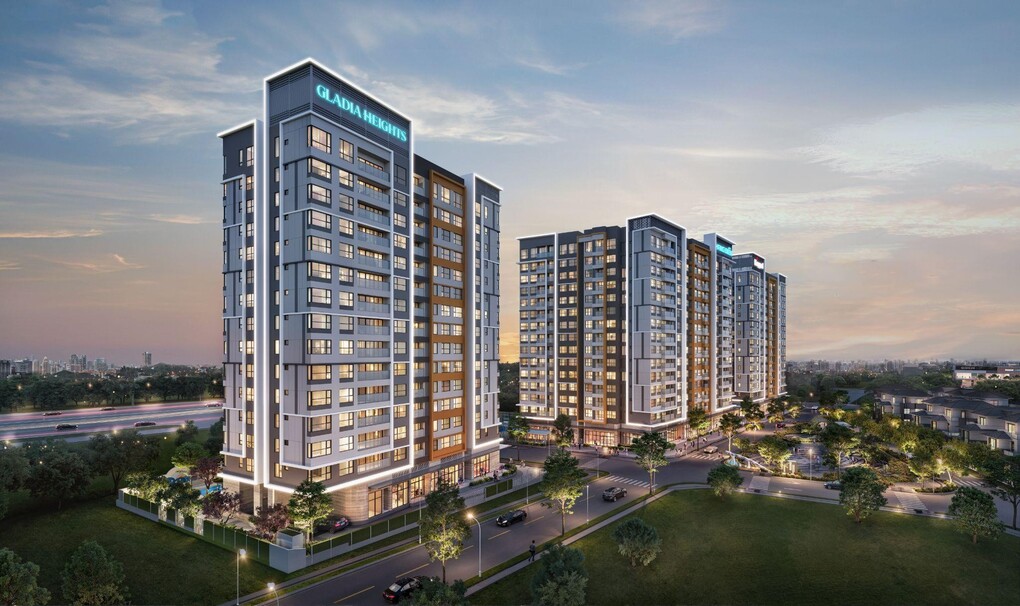
Thanh Phu Centre Point directly connects with the synchronized infrastructure network at the western gateway of Ho Chi Minh City. Photo: BIM Land
Thanh Phu Centre Point directly connects with the synchronized infrastructure network at the western gateway of Ho Chi Minh City. Photo: BIM Land
According to a representative of BIM Land, this connectivity advantage enables Thanh Phu Centre Point to welcome three shifting trends emerging alongside infrastructure development. These are the influx of residents as the trend of expanding living space from Ho Chi Minh City to gateway urban areas becomes more prominent; the flow of trade as the inter-regional connection network stimulates commercial and service demands; and the flow of investment capital as the market enters a new development cycle along with key infrastructure projects.
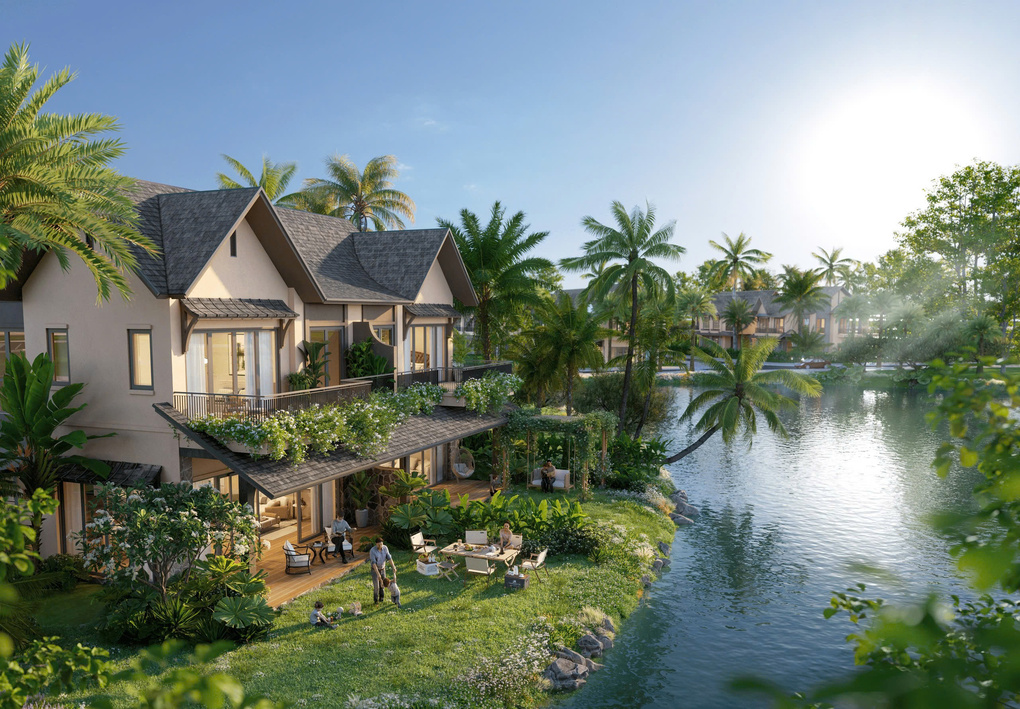
From these three shifts, Thanh Phu Centre Point is planned as an integrated commercial urban area, aiming to simultaneously meet the needs of settlement, business, and commercial exploitation. According to the master plan, the project will develop a 9-hectare Mega Mall, a 3-hectare central park lake, a 1.2-hectare musical fountain square, a floating resort swimming pool, and an international-standard sports complex. The utility system is designed not only to serve residents but also to contribute to forming a new destination, increasing commercial vitality for the entire region.

Thanh Phu Centre Point develops a large-scale utility system, aiming to exploit the advantages of infrastructure completion and increased regional connectivity. Photo: BIM Land
Thanh Phu Centre Point develops a large-scale utility system, aiming to exploit the advantages of infrastructure completion and increased regional connectivity. Photo: BIM Land
The project is developed by BIM Land based on over 31 years of experience in creating urban areas and destinations, in collaboration with international consulting firms for planning and design.
As key infrastructure routes gradually come into operation, the western region of Ho Chi Minh City is expected to enter a new development cycle. In this context, Thanh Phu Centre Point not only benefits from connectivity advantages but is also positioned to become one of the focal points attracting residents, trade, and investment at the western gateway of Ho Chi Minh City.

Leave a Reply