
South Ho Chi Minh City receives major infrastructure boosts

Real estate
In Ho Chi Minh City and major urban centers, infrastructure is a key driver positively impacting the development of the real estate market. For instance, in the Eastern zone, Thu Thiem 1 Bridge, Hanoi Highway (now Vo Nguyen Giap Street), Long Thanh – Dau Giay Expressway, and Metro Line 1 have contributed to expanding urban space, keeping the area vibrant and leading housing supply for many years.
For the South, after a period of relative quiet, the area is projected to become more attractive as infrastructure enters a phase of large-scale investment.

During the 2025-2030 period, a series of key projects will be implemented or put into operation in the South, ranging from gateway intersections and river-crossing bridges to high-speed railway systems. Each project helps resolve a bottleneck, forming a new transport network that significantly expands the area’s development space.
The start of this cycle is the stable operation of the Nguyen Van Linh – Nguyen Huu Tho underpass from early 2025. Located on Nguyen Van Linh Street, the underpass consists of two branches, each 456 meters long with three vehicle lanes. The project has a total investment of 830 billion VND. Once both branches are operational, long-standing traffic congestion in the South is largely resolved.
This is not only the gateway to Phu My Hung, Tan Thuan Export Processing Zone, or RMIT University, but also a vital traffic artery connecting Nha Be with central Ho Chi Minh City. Smooth traffic flow on the Nguyen Van Linh axis has created positive impacts on the economy, urban development, and daily life of residents.

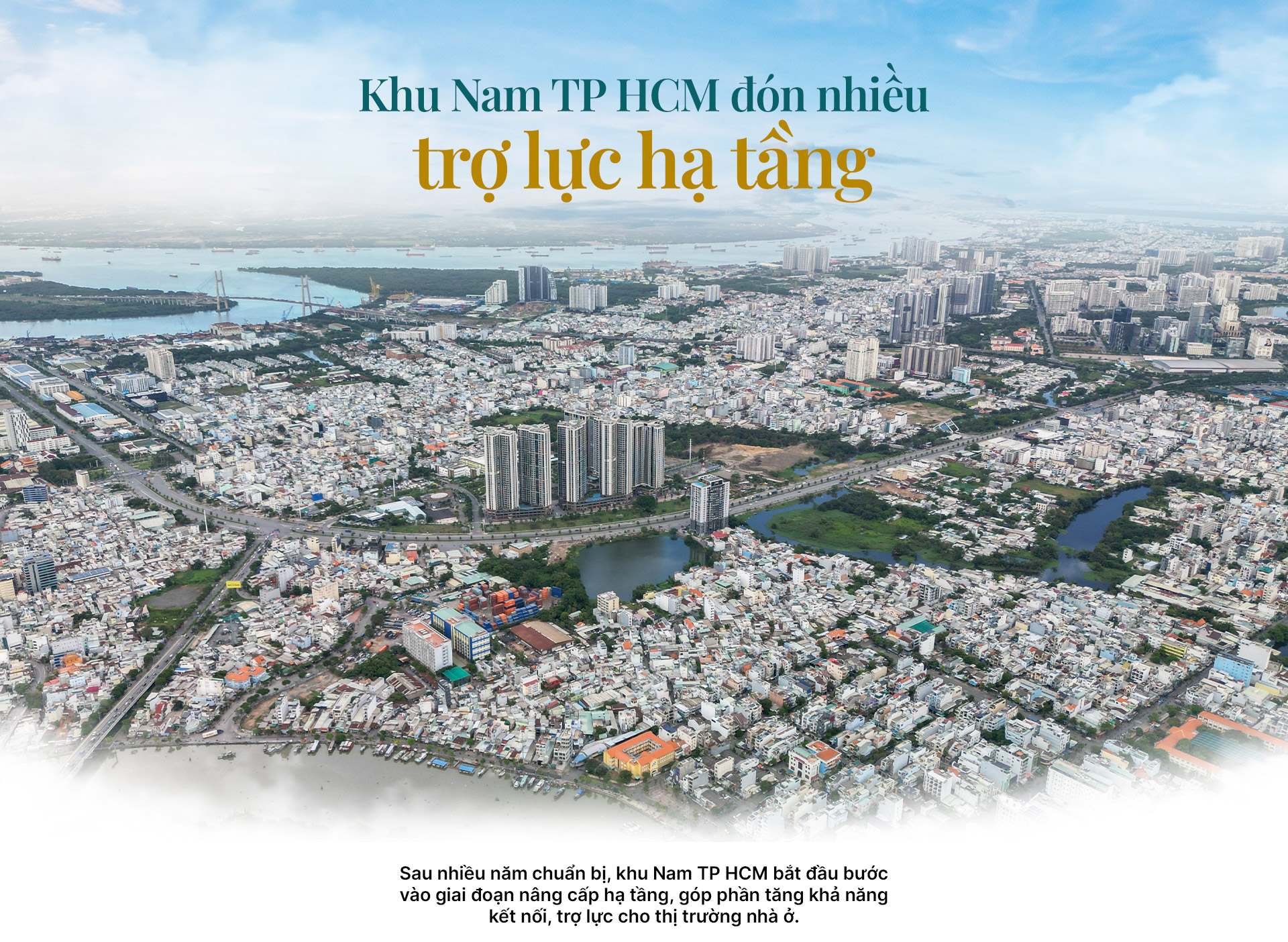
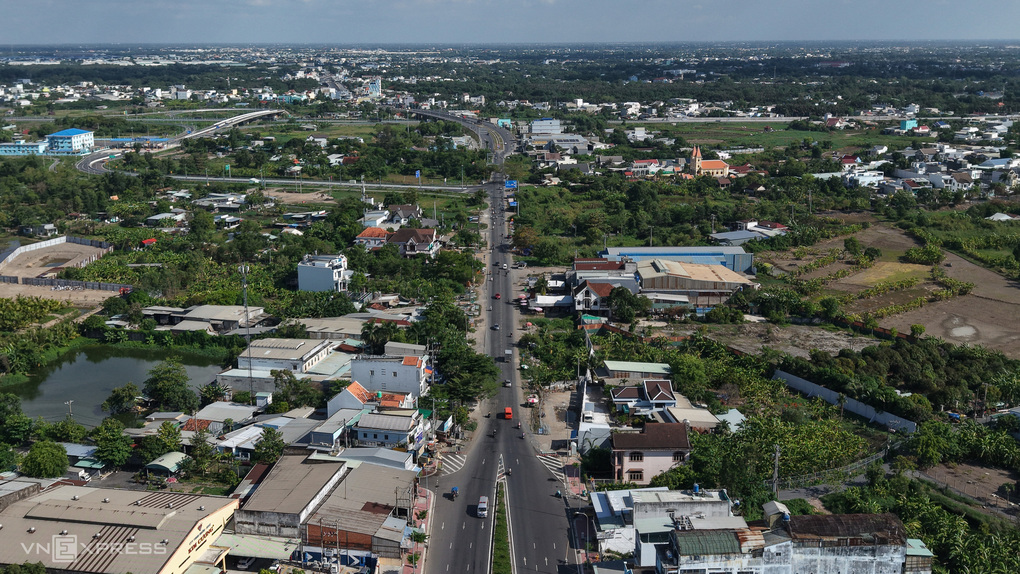
A corner of South Ho Chi Minh City with real estate projects along infrastructure routes. Photo: Quynh Tran
Beside the underpass, Ho Chi Minh City continues to expand new connection routes. Nguyen Khoai Bridge is one of the most important pieces of this strategy.
After nearly a decade of preparation, the project officially broke ground at the end of 2025 with total capital of over 3,700 billion VND and is expected to be completed in 2027. Once operational, the bridge will create a direct connection route from the South into the city center, reducing pressure on Kenh Te Bridge and the Nguyen Huu Tho axis, which have suffered from prolonged traffic congestion for years. Beyond shortening travel time, the work also contributes to changing the access direction of District 7 and Nha Be toward Ho Chi Minh City’s core urban area.
South Ho Chi Minh City also possesses multiple projects aiming to open additional inter-regional development corridors.

Infrastructure network in the South with many newly invested projects. Graphic: Hung Loc Phat
For instance, Phu My 2 Bridge is planned to directly connect the South with Dong Nai and Long Thanh International Airport. The bridge is 6.3 kilometers long, starting at the intersection with Nguyen Huu Tho Street through Phu Thuan, Tan My wards, Nha Be commune, and ending at Dai Phuoc commune (Dong Nai). The bridge is designed with 8 lanes (6 car lanes and 2 mixed lanes); the access roads at both ends have a minimum of 8 lanes with corresponding technical infrastructure.
Meanwhile, Thu Thiem 4 Bridge has a total length of 2.16 kilometers, opening a connection direction from the South to Thu Thiem Peninsula. The starting point is at Nguyen Van Linh Street near the intersection with Tan Thuan 2 Bridge (Tan Thuan Ward), and the ending point is at Nguyen Co Thach Street in Thu Thiem New Urban Area (An Khanh Ward).

Infrastructure opens up more space for urban development in the South. Photo: Quynh Tran
According to experts, when both projects are completed, the South will no longer only connect in the North-South direction as it currently does, but will form a multi-directional traffic network, directly linking with the East and new economic centers.
Not stopping at the road network, the South is also expected to benefit from the Ben Thanh – Can Gio high-speed railway project. The line of over 50 kilometers is invested by Vinspeed. Unlike Metro Line 1, this railway is oriented to apply high-speed railway technology of 350 km/h, shortening travel time from central Ho Chi Minh City to Can Gio to about 15-20 minutes.
Along the line, three stations – Tan Thuan, Tan My, and Nha Be – are located in the South, which is considered an opportunity to form TOD complex areas in the coming years.

Batdongsan’s report for the first 6 months of 2026 indicates that the Vietnamese real estate market is entering a more sustainable development phase. Instead of growth driven by expectations, capital flows are increasingly guided by long-term planning, infrastructure investment, product quality, and market transparency.
In Ho Chi Minh City and Hanoi, metro lines, ring roads, and inter-regional expressways are reshaping the urban development map, leading to a shift in both supply and demand from central areas to new development corridors.
A survey by Batdongsan shows that 67% of respondents rate urban planning as having a large or very large impact on the real estate market. Planning has become an important basis in decisions made by home buyers as well as project developers.

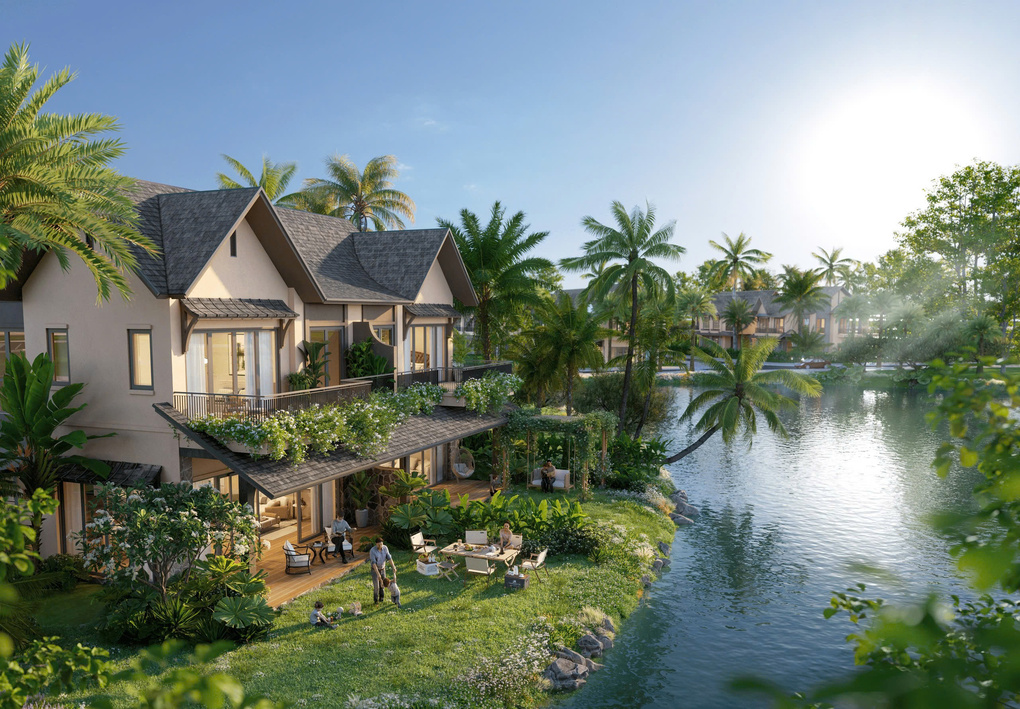
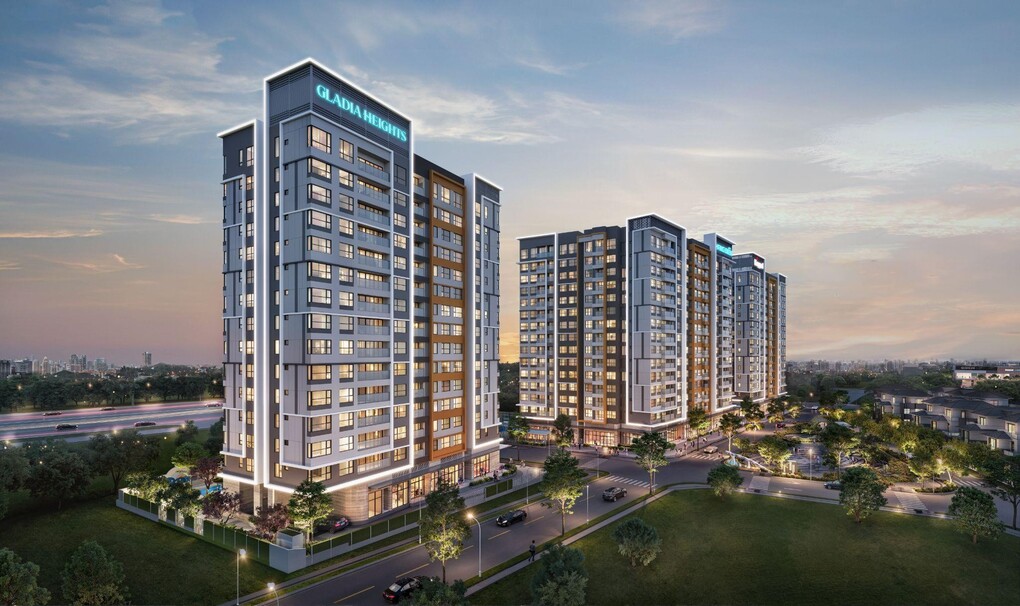
Perspective of The Peak Garden project in South Ho Chi Minh City. Photo: Hung Loc Phat
65% of brokers said buyers prioritize projects located near key infrastructure developments such as metro stations, ring roads, or major bridges. 91% believe customers are willing to pay extra to own real estate with connectivity advantages, with the common acceptable increase ranging from 5-10% compared to similar projects.
According to experts, travel time and connectivity are playing a more crucial role in the real estate picture than geographic distance.

Actual construction progress of The Peak Garden project in South Ho Chi Minh City. Photo: Hung Loc Phat
Beyond changing product selection criteria, home buyers are also becoming increasingly cautious during their decision-making process. Factors such as legal status, infrastructure implementation progress, connectivity, and project transparency are prioritized. In the same segment, projects with completed infrastructure, clear legal standing, and existing residential communities record higher appeal.
From a supply perspective, CBRE Vietnam experts believe the South will be a bright spot in the market in the coming time. In its Q2 2026 market report, CBRE forecasts that new apartment supply for the whole year 2026 in the former Ho Chi Minh City area will triple compared to the previous year. The South will act as the driving force with a 50% market share, surpassing the East (30%).

Perspective of amenities and living space at The Peak Garden project. Photo: Hung Loc Phat
CBRE noted that the South has great development headroom and competitive land prices. Notably, under the infrastructure development plan through 2030, this area will welcome many key transportation projects. This is why developers tend to stay one step ahead, preparing land banks and developing projects to anticipate the new infrastructure cycle.
The market continues a stronger trend of screening. Projects with good locations, high development quality, and supported by synchronized infrastructure will be the most effective products to attract cash flow, CBRE’s report assessed.

Content: Hoai Phuong – Design: Ngan Ha


Leave a Reply