
Mr. Nguyen Van Hung (42 years old, Ho Chi Minh City) has just decided to pause his plan to spend nearly 12 billion VND on a townhouse in the Eastern area.
For the past few years, he said he has frequently used financial leverage to expand his portfolio of townhouses and apartments. With a loan ratio of 50-60% of the asset value, an annual price increase of 15-20% used to be enough to make the investment profitable after deducting capital costs.
But the current equation is different. “Previously, borrowing 5 billion VND and paying about 30 million VND in interest each month was still manageable. Now, with rising interest rates and rental cash flow failing to keep up, I dare not borrow more,” he said.
Not only Mr. Hung, but many individual investors are also shifting their status from “expansion to defense” as capital costs increase significantly, while expectations for price appreciation are no longer as easily met as in previous periods.
Ms. Tran Thu Ha, an investor who owns two rental apartments in Thu Duc City, said her plan to buy more real estate had to be paused even though the capital was ready. According to her, the rental yield is currently only around 2-3% per year, while loan interest rates are rising to 11-15% a year, making the use of leverage ineffective.
“If borrowing at this time, the cash flow risk is much higher than the expected price increase,” she acknowledged.
This development is not only appearing among individual investors but is spreading across the market as real estate loan interest rates remain high. Surveys at many banks show that preferential interest rates are commonly 9-12% for preferential terms of 12-24 months. After the preferential period, floating interest rates can reach 12-15% a year depending on the loan.

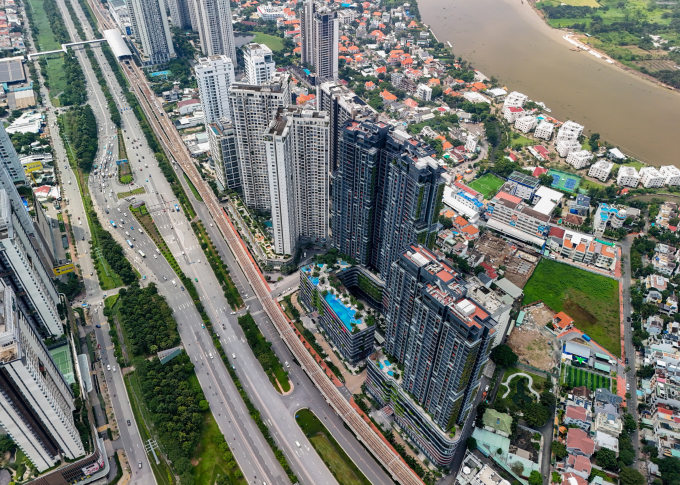
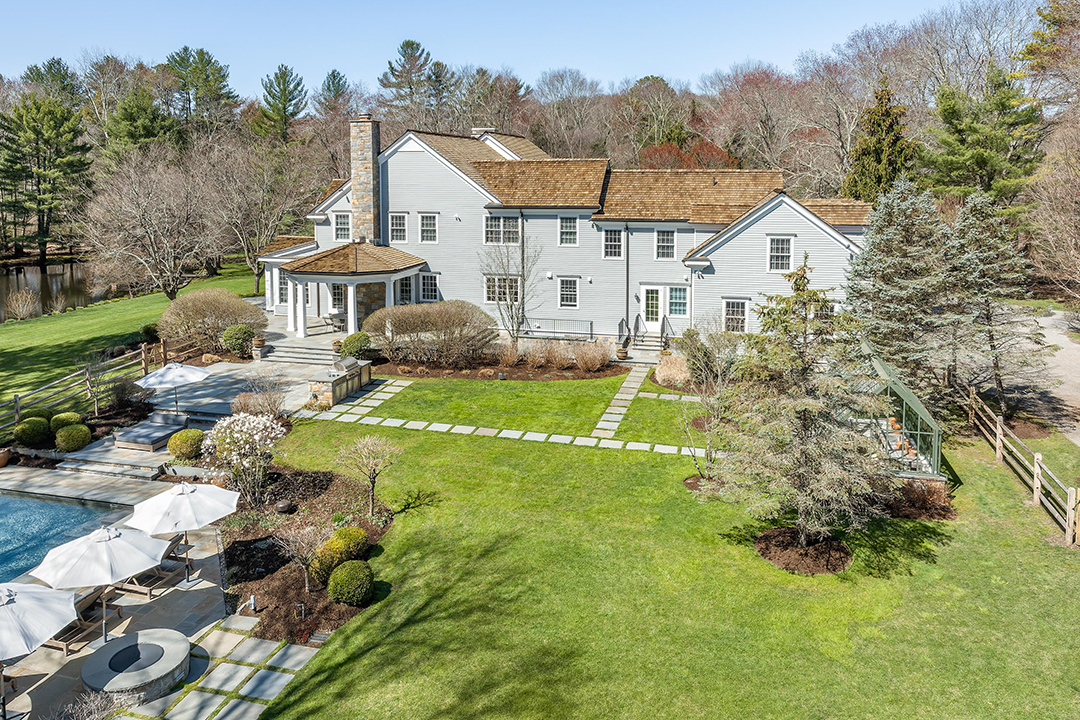
The real estate market in the Eastern area of Ho Chi Minh City. Photo: Quynh Tran
The real estate market in the Eastern area of Ho Chi Minh City. Photo: Quynh Tran
Survey data from the Center for Market Research and Customer Insight of One Mount Group shows that the percentage of customers with real estate purchasing needs decreased by nearly 35% in the past quarter in both the considering and preparing to buy groups. Among them, the “preparing to buy” group dropped from 11% to 6%, while the “considering buying” group fell from 44% to 30%. Conversely, the proportion of people with no demand to buy real estate increased from 13% to 39%, reflecting a trend of temporarily leaving the market rather than just delaying the decision.
The time taken to make a home-buying decision is also longer. Only 17% of customers plan to make a transaction within the next 6 months, while the percentage of those planning to buy within two years increased from 57% to 69%.
According to One Mount Group, the main pressure causing real estate cash flows to stagnate comes from price levels and interest rates. Housing prices rising faster than incomes makes accessibility increasingly difficult, while loan interest rates remain high and economic prospects are still volatile, causing both real homebuyers and investors to become more cautious in the short term.
Market liquidity also clearly reflects this trend. A report by DKRA Consultings shows that the primary apartment supply in Ho Chi Minh City and surrounding areas in May decreased by 22% compared to the previous month. The volume of new launches fell by 66%, while the absorption rate only reached about 19% of the total primary supply.
Mr. Vo Hong Thang, Deputy General Director of DKRA Consultings, stated that the Ho Chi Minh City apartment market is entering a period of slow liquidity as prices are no longer rising strongly but have not dropped deeply enough to stimulate real housing demand.
According to him, the price level has been pushed too high after years of continuous increases. Primary apartment prices are currently commonly 90-120 million VND per square meter, and many central and riverside projects have far exceeded the affordability of the majority of buyers. Meanwhile, although the secondary market has cooled down, selling prices remain anchored high, making even products advertised as “cutting losses” difficult for real homebuyers to access.
Besides the price factor, rising capital costs also make investors more cautious. High home loan interest rates increase financial pressure, while new supply is continuously added, giving buyers more choices and eliminating the mentality of spending money at any cost like before.
Sharing the same view, real estate expert Le Quoc Kien believes that interest rate pressure is significantly changing the real estate investment equation. With current home loan interest rates, many people are bearing costs twice as high as in the previous preferential period.
Specifically, with a loan of 5 billion VND, an interest rate increase from 8% to 14% a year means an additional capital cost of about 300 million VND per year, significantly narrowing the investment profit margin. In the context of real estate prices still anchored high, the effectiveness of using financial leverage is no longer as attractive as before.
“In the low interest rate period, investors could accept borrowing heavily thanks to the expectation of price increases sufficient to cover capital costs. But now, they are forced to calculate more carefully about cash flow and profitability. Assets that solely rely on price appreciation will be less attractive than before,” Mr. Kien said.
This makes the current priority of investors to preserve cash flow instead of expanding their portfolios with financial leverage, and they are forced to calculate the profitability equation more carefully. Assets that solely rely on expected price increases will be less attractive, while products that generate stable cash flows are prioritized.
The market is entering a stage of strong differentiation. Experts assess that cash flow in the coming time will still prioritize areas with developed infrastructure, good exploitation capabilities, and the generation of real cash flow. Conversely, products heavily dependent on expected price increases or large leverage will face more difficulties.
Phuong Uyen




Leave a Reply