
The Ministry of Agriculture and Environment proposes to remove the regulation on specific land prices, replacing it with determination based on land price tables and adjustment coefficients.
The draft amended Land Law has just been published by the Ministry of Agriculture and Environment for public consultation until August 10. In the submission, the Ministry stated that after nearly two years of implementing the 2024 Land Law, there remain several limitations, requiring further study and policy refinement to unlock land resources for socio-economic development.
Among the proposals, the drafting agency suggests removing specific land prices. Instead, the land price table and the adjustment coefficient will be applied to calculate state budget revenues from land and determine the value of land use rights during the equitization of state-owned enterprises.
Under the current law, specific land prices are applied in seven cases, including calculating land use fees for organizations when the State allocates land without auction or bidding to select investors; one-off rental payments for the entire lease term; and the value of land use rights during the equitization of state-owned enterprises. Additionally, management agencies use specific prices to calculate compensation when the State recovers land.
This land price is usually determined by a valuation consulting unit using one of four methods (comparison, income, surplus, and price adjustment coefficient). Subsequently, this price is submitted to the Appraisal Council for review before the Provincial People’s Committee makes the final decision.
Meanwhile, the land price table serves as one of the bases for calculating payments in many cases, such as when the State allocates or leases land, permits change of land use purpose, calculates taxes, fees, administrative fines, or compensation when the State recovers land. The price table is built based on land type, area, and location. The Provincial People’s Council decides the price table, which will be applied from January 1, 2026, and can be adjusted or supplemented when necessary. The adjustment coefficient is the rate of price increase or decrease for corresponding land types in the areas and locations specified in the price table.

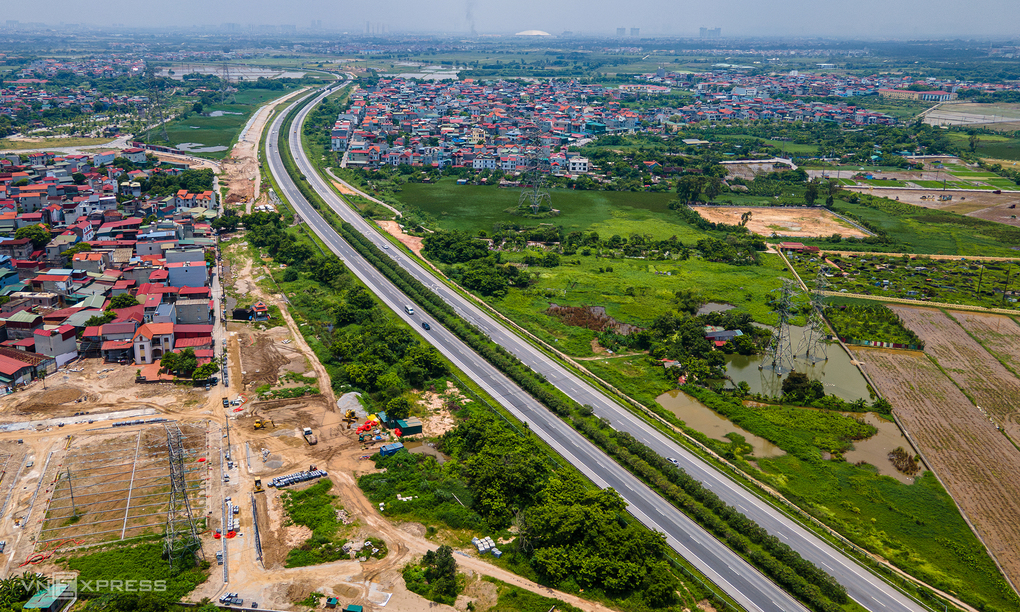
Thu Lam commune area – one of the two communes piloting the socialist commune-ward model in Hanoi. Photo: The Bang
Thu Lam commune area – one of the two communes piloting the socialist commune-ward model in Hanoi. Photo: The Bang
The Ministry of Agriculture and Environment proposes applying the land price table and adjustment coefficient because valuation based on market principles faces many obstacles, affecting management and resettlement compensation.
According to the drafting agency, the co-existence of both the land price table and specific land prices creates a “two-price system.” The database for valuation is still lacking, while valuation methods rely heavily on data. Market prices are also affected by “speculation and price inflation.”
The Ministry of Agriculture and Environment asserts that land prices decided by the State will be based on complete, scientific, and public data, reasonably reflecting market reality. At the same time, this price level will also be linked with land, tax, notarization, and banking databases to prevent manipulation and the formation of a multi-price mechanism.





Leave a Reply