
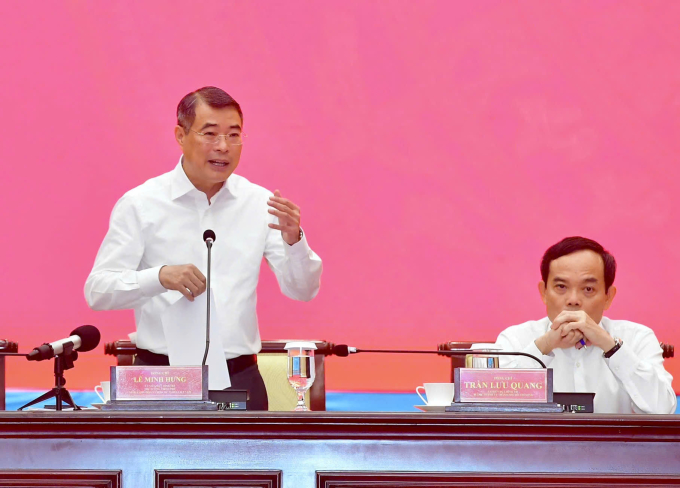
“A backlogged project cannot be considered resolved if only the plan has been approved but the investor has not yet returned to implement it in reality,” Prime Minister Le Minh Hung emphasized at a working session with the Standing Board of the Ho Chi Minh City Party Committee on the morning of June 13. Also attending were deputy prime ministers, leaders of ministries and sectors, and representatives of many large enterprises and corporations investing in Ho Chi Minh City such as Vingroup, Sun Group, Masterise, THACO, Sovico, Nam Long, Khang Dien, Le Thanh, and Bcons.
According to the head of the Government, Ho Chi Minh City still has a large number of long-standing backlogged projects that have not been completely resolved, while this is an important resource to promote growth and solve the city’s development bottlenecks.

Prime Minister Le Minh Hung speaking at the working session with the Standing Board of the Ho Chi Minh City Party Committee on the morning of June 13. Photo: Thanh Tung
Prime Minister Le Minh Hung speaking at the working session with the Standing Board of the Ho Chi Minh City Party Committee on the morning of June 13. Photo: Thanh Tung
Citing the example of the 10,000 billion VND anti-flooding project, he requested clarification on issues within the city’s jurisdiction, and issues beyond its jurisdiction must be reported so that the Government and relevant ministries and sectors can handle them together.
“This year, the anti-flooding project must be completed, no matter the reason,” the Prime Minister said. According to him, for obstacles within the Central Government’s jurisdiction, especially those related to banks and capital sources, the Government will have appropriate solutions to remove them. However, for issues within the local jurisdiction, especially investors’ petitions, Ho Chi Minh City must proactively handle them because the mechanism for handling problematic projects has been perfected by the Central Government.
In addition, he requested Ho Chi Minh City to continue reviewing all backlogged projects in the former Binh Duong and Ba Ria – Vung Tau areas, because after expanding administrative boundaries, the number of projects needing resolution could be even larger than at present.
For projects that have been reviewed, concluded, and qualified according to the regulations of the Politburo, the National Assembly, and the Government, the city must quickly put them into actual implementation.
The Prime Minister noted that, through Ho Chi Minh City’s report, many projects currently stop at agreeing on a handling plan, while in reality, investors have not yet returned to implement the projects.
“It cannot be considered resolved if a plan is only approved but the project has not been implemented again in reality,” the Prime Minister said. To ensure that removing obstacles for backlogged projects is practical, the Ministry of Finance, the Government Inspectorate, and relevant agencies will continue to monitor the implementation process.
According to him, many long-standing issues in Ho Chi Minh City such as traffic congestion, flooding, and environmental pollution are directly related to the implementation progress of key infrastructure projects. Therefore, if these projects continue to be delayed, not only will the quality of life of the people be affected, but the investment environment, competitiveness, and capital attraction capacity of the city will also be negatively impacted.

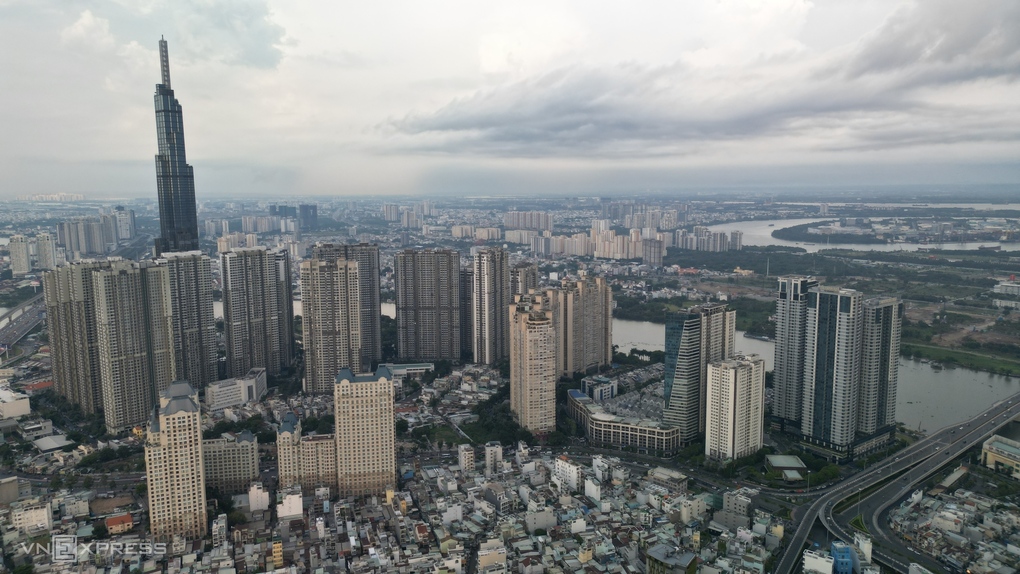
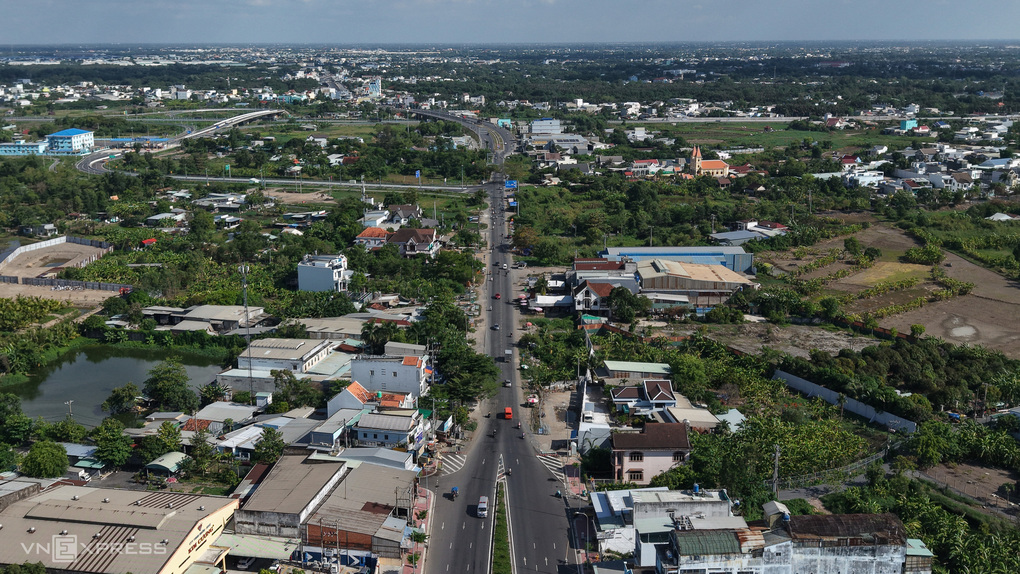
Real estate in the eastern area of Ho Chi Minh City, April 2026. Photo: Quynh Tran
Real estate in the eastern area of Ho Chi Minh City, April 2026. Photo: Quynh Tran
Previously, according to a report by the Ho Chi Minh City People’s Committee, the whole city has 838 backlogged and problematic works, projects, and land plots. Among them, 54 projects fall under the resolving jurisdiction of the Central Government, and 784 projects fall under the resolving jurisdiction of the locality.
The city has completed removing obstacles and provided directional solutions for 838 out of 838 projects subject to handling, achieving a rate of 100%, clearing 17,000 hectares of land and mobilizing over 206,000 billion VND of social investment capital.
Among these, 417 projects have been completely resolved legally, completed site clearance compensation, or have been allocated land, allowing investors to restart construction and hand over for social operation and exploitation.
There are 393 projects that have basically completed the removal of major obstacles and are carrying out the final procedures. Only 28 projects continue to be focused on for resolution due to their particularly complex legal nature, involving many different legal periods.
According to the Ho Chi Minh City Real Estate Association (HoREA), in the list, there are 303 cases currently in the status of basically completed removal, directed for removal, being removed according to directions, having removal orientation, or continuing to process. According to HoREA, these groups are essentially not completely resolved and need continuous monitoring.
The Association believes that the current bottleneck no longer lies in the lack of a handling mechanism but in the organization of implementation. Many projects have identified a removal direction but still require more time to complete procedures related to planning, land, investment, or financial obligations before they can be deployed again.



Leave a Reply