
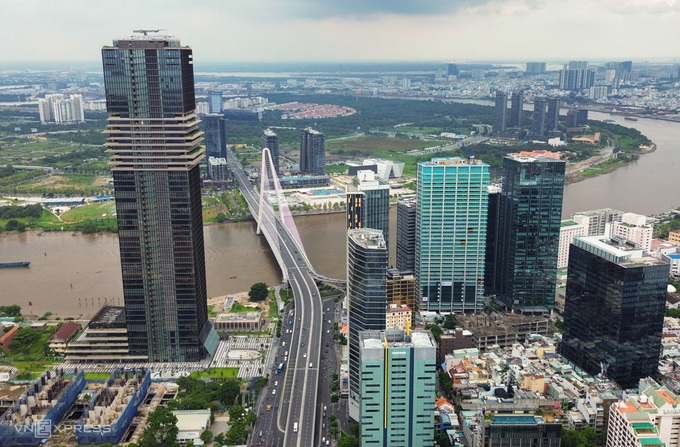
Speaking at the Office Forward: IFC Edition event on June 18, Ms. Pham Ngoc Thien Thanh, Head of Research and Consulting at CBRE Vietnam in Ho Chi Minh City, stated that the IFC will be a “game changer” for the office market in the coming years.
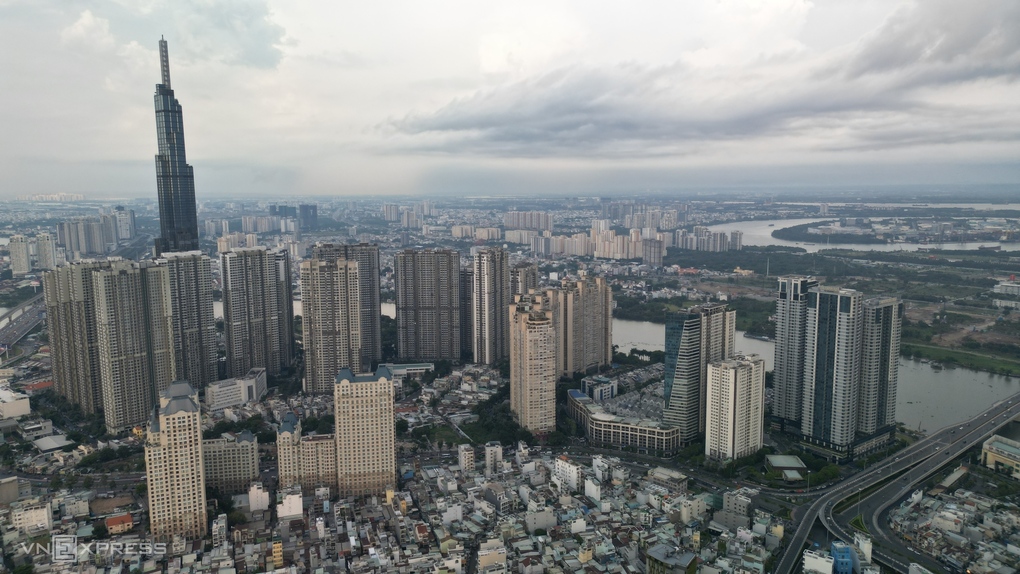
According to Ms. Thanh, the size of the Ho Chi Minh City office market has grown significantly over the past decade, from about 1 million square meters in 2015 to 1.7 million square meters today. However, the notable point is not only the increase in area but also the shift towards high-quality buildings.
In the next three years, the market is expected to welcome about 165,000 square meters of new Grade A office space. In particular, many future projects will be concentrated in the International Financial Center area. “We expect the IFC to be completed around 2030 and it could add more than 800,000 square meters of new office supply,” Ms. Thanh said.
If realized, this amount of supply is equivalent to nearly half the size of the entire Ho Chi Minh City office market today.
However, according to experts, the greater impact of the IFC lies not in the square meters of office space built but in the tenant group this area targets.

Image of the Saigon Marina IFC financial center building in Ho Chi Minh City. Photo: Quynh Tran
Image of the Saigon Marina IFC financial center building in Ho Chi Minh City. Photo: Quynh Tran
According to Ms. Bui Viet Linh Dan, Senior Investor Relations Specialist at V-IFC HCMC, the international financial center is oriented to attract sectors such as banking, fintech, bonds, commodity trading, and many international financial service organizations. This is a tenant group that inherently has very high requirements for office quality and working environment.
In reality, the emergence of global financial institutions often brings a huge demand for Grade A offices. This is a model that has taken place in financial centers like Singapore, Dubai, or Hong Kong, where investment banks, asset management companies, international law firms, and financial technology enterprises cluster in office areas that meet international standards.
Not only concerned about location or rental prices, these organizations often set strict standards for construction quality, operational technology, sustainable development, and infrastructure connectivity.
This trend has partly appeared in the Ho Chi Minh City market. A CBRE survey of multinational corporations shows that businesses no longer view the office merely as a workplace. Criteria regarding air quality, environmental monitoring, employee wellness, and collaborative spaces are becoming top priorities.
Up to 92% of businesses participating in the survey evaluate collaborative spaces and internal networking areas as important factors in enhancing corporate culture and productivity. Besides, green standards are also increasingly becoming a common requirement for the high-end office segment.
“Green certification is no longer an added advantage but has become an almost mandatory condition for new Grade A projects,” Ms. Thanh commented.
According to CBRE, this trend will accelerate as Ho Chi Minh City attracts more financial institutions, investment funds, and international technology enterprises through the IFC.
Mr. Richard Mark Leech, Senior Director of International Sales and External Relations at Saigon Marina IFC, believes that Vietnam possesses many advantages to become a new destination for global capital flows.
According to him, Vietnam’s economy currently has a scale of about 480 billion USD, maintains a growth rate of 6-7% per year, and is facing the opportunity for a stock market upgrade. Along with a stable political environment and a neutral position amidst volatile global geopolitics, Vietnam is emerging as an attractive destination for international investors.
“When looking at those factors, the question is no longer why capital flows will come to Vietnam, but where the capital flows will go once in Vietnam,” Mr. Leech said, adding that if this capital flow becomes more strongly present through the IFC, the demand for Grade A offices is forecast to increase correspondingly.
Ms. Pham Ngoc Thien Thanh added that the Ho Chi Minh City office market is entering a more distinct differentiation phase. If previously competitive advantages mainly came from location and rental prices, in the coming period, criteria for green buildings, user experience, collaborative spaces, operational technology, and infrastructure connectivity will play a decisive role.
The formation of the IFC is expected to accelerate this process. Buildings that meet international standards can benefit from the new wave of tenants, while older projects will have to invest in upgrades to maintain their competitiveness.
“The IFC therefore not only creates additional supply for the market but can also set a new standard baseline for the Ho Chi Minh City office segment in the next decade,” Mr. Richard stated.
Phuong Uyen



Leave a Reply