
In a recent market report, the online real estate information channel Batdongsan, owned by PropertyGuru Group, stated that the Hanoi real estate market is facing downward price pressure across various segments and areas.
For the apartment segment, the average asking price on this platform reached 85 million VND per square meter, continuing its downward trend over the past three months.
For individual houses, the popular asking price also decreased slightly by 1% and tends to continue going down. The downward trend spans across many old central districts such as Ba Dinh, Dong Da, Ha Dong (down 3%), Nam Tu Liem (2%), Hai Ba Trung, and Hoang Mai (1%). Particularly for street-facing houses, the purchasing demand dropped sharply by 10% compared to the previous month and plunged by nearly 50% compared to the same period last year.
Although selling prices have cooled down, the majority of buyers maintain a cautious mindset. Batdongsan channel reported that the overall market interest in May dropped by 4% quarter-on-quarter and plummeted by 36% year-on-year.
Similarly, the real estate listing channel Nha Tot also recorded a decline in property selling prices in many areas. For instance, in the old Thanh Xuan district, the average asking price for individual houses on the platform reached nearly 284 million VND per square meter in May, down more than 5% compared to the previous month. Likewise, the Dong Anh area decreased by 3%, and Ha Dong decreased by 1.3%.

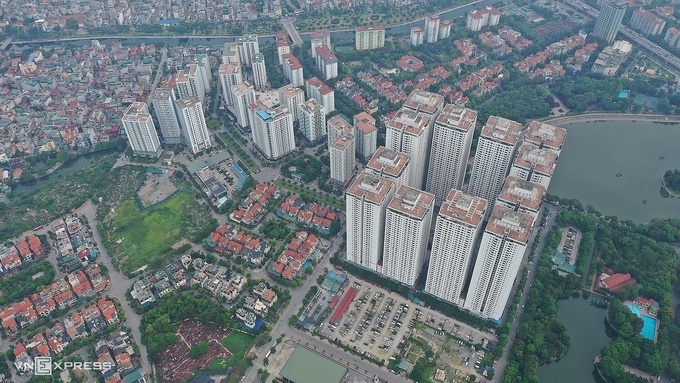
Real estate in Hoang Mai area, Hanoi. Photo: Ngoc Thanh
Real estate in Hoang Mai area, Hanoi. Photo: Ngoc Thanh
According to VnExpress observations, the situation of investors offloading properties is becoming increasingly common in the Hanoi apartment market. At a subdivision of four 30-story buildings in an eastern mega-urban area, a homeowner had to reduce the price by 650 million VND on the sales contract just to secure a deposit from a buyer. He accepted a loss of 350 million VND in external premium paid to the agency to acquire the 58-square-meter apartment in October last year. Similarly, in the northern and western mega-urban areas, cases of financially pressured owners listing their houses with price reductions of 200 to 600 million VND per unit are appearing more frequently, yet brokers say it is very difficult to liquidate.
Experts observe that real estate transactions in the capital have significantly declined, indicating that investment cash flows are becoming more hesitant in the face of macroeconomic factors such as interest rates, inflation, and geopolitical risks. In a recent industry report, VPBank Securities stated that the pressure to adjust selling prices occurs in the context of home loan interest rates simultaneously increasing by about 0.5 to 1.5% compared to the end of last year. Fixed interest rates for the initial 12 to 24-month period are currently common at 9.2 to 10.5% per year, while floating interest rates have risen to 12 to 13.5% per year, approaching the peak recorded at the end of 2022.
The real estate market’s reliance on bank credit is at a significant threshold. Therefore, the tightening of home loan conditions by many banks will directly impact market liquidity, especially the secondary market, the report stated.

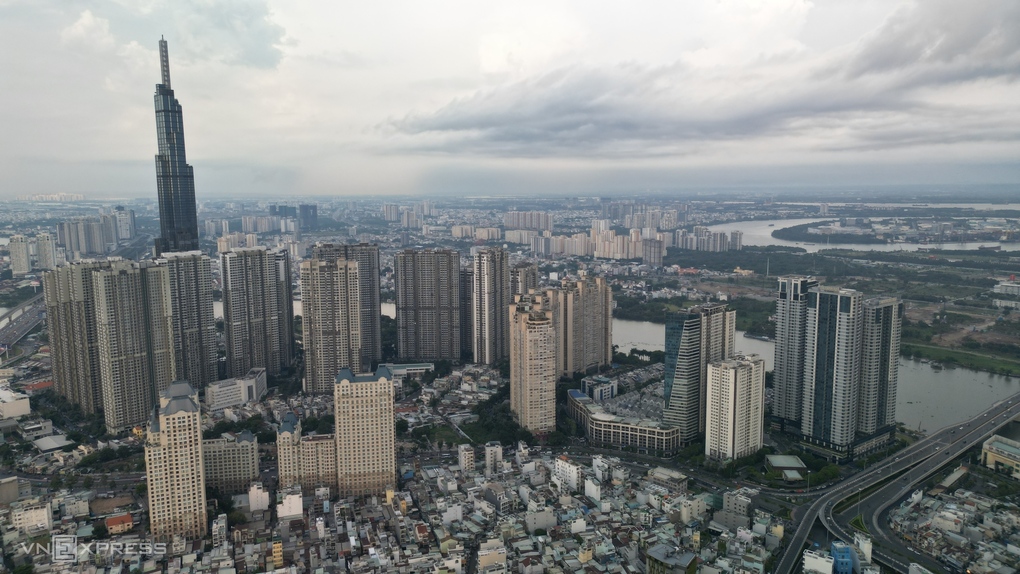
A portfolio of resale apartments in a western Hanoi urban area in April 2026. Photo: Ngoc Diem
A portfolio of resale apartments in a western Hanoi urban area in April 2026. Photo: Ngoc Diem
Ms. Nguyen Ly Ly, Market Research Manager at Cushman & Wakefield Vietnam, observed that each segment also faces its own liquidity pressure. For apartments, she noted that many secondary investors are dealing with high capital costs to maintain their assets, while having to compete with new projects offering attractive sales policies and numerous incentives from developers. The pressure to offload for this group increases amid an abundant new supply and upcoming handovers. From now until 2028, Cushman & Wakefield forecasts that Hanoi will have more than 28,000 products handed over from about 80 projects and subdivisions.
Regarding individual and street-facing houses, Ms. Ly stated that this type still encounters many challenges such as planning concerns; tightened capabilities to exploit sidewalk businesses; declining rental yields; houses located deep in narrow alleys lacking amenities, and numerous fire safety risks.
Mr. Nguyen Chi Thanh, General Director of Ho Tay International Building Company, considered the situation of lowering expected prices, or even cutting losses, as a normal reaction in the context where asset holders want to quickly recover cash as market liquidity weakens. According to him, at this time, investors need to proactively reassess their financial capabilities to have a risk management plan.
The undercurrent of asset price reductions may continue to spread into the upcoming quarters as difficulties in capital shortage and cash flow crunches reach a critical stage, putting heavy pressure on secondary investors, he said.





Leave a Reply