
According to data from the online real estate trading platform Batdongsan (a technology platform owned by PropertyGuru), in the second quarter, the level of interest in land plots in the Southern region decreased quite sharply. In Ho Chi Minh City, land plot searches in this quarter were 5% lower than the previous quarter and decreased by 16% over the same period last year.
This trend also occurred in localities that recently merged into Ho Chi Minh City. The former Binh Duong area recorded a 10% decrease in purchase demand compared to the previous quarter and a 32% drop compared to the same period in 2025. In the former Ba Ria – Vung Tau, the decreases were 7% and 38%, respectively.
Similarly, Dong Nai and Tay Ninh also witnessed a 22-33% downward trend in land plot searches compared to the same period.
With weakening land plot searches, the actual liquidity of this segment continued to remain low. According to DKRA Consulting, the volume of successful transactions in the land plot market in the first half of the year was only equivalent to 3-5% of the total primary supply, dropping by about half compared to the same period last year. In the villa and townhouse segment, the consumption rate also only reached about 4%.

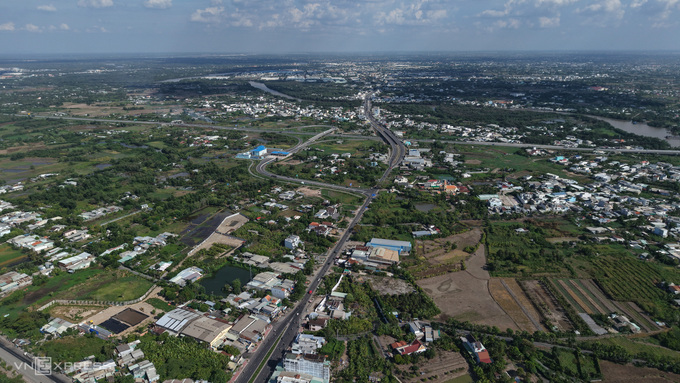
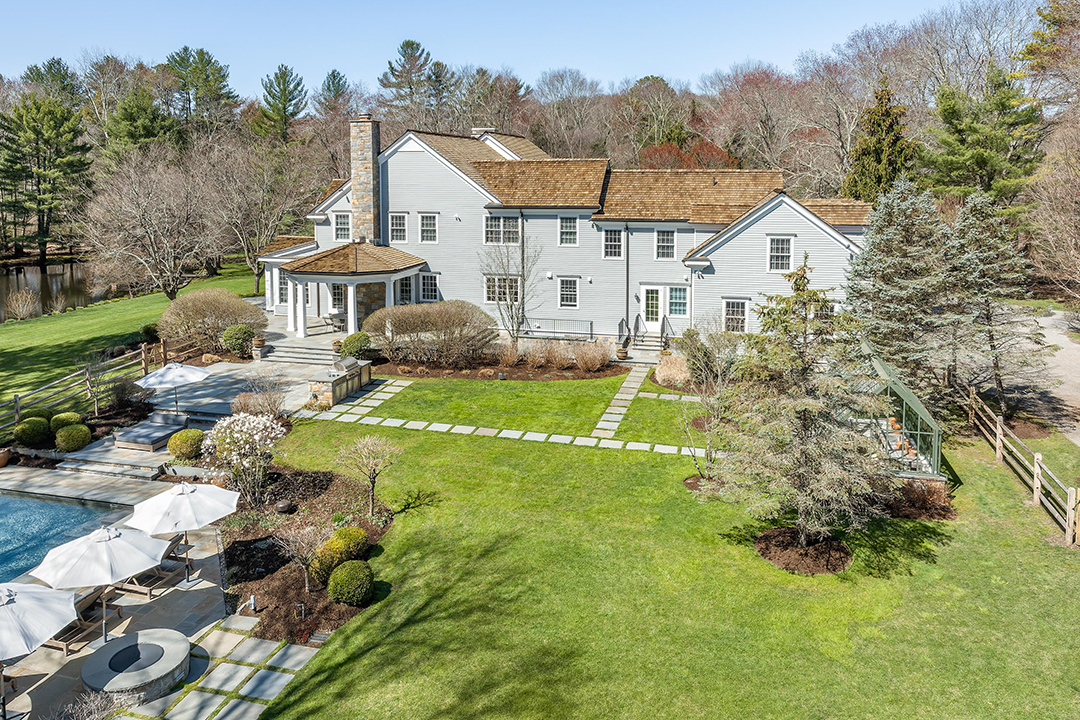
Real estate in the Western area of Ho Chi Minh City with land plot and landed property segments. Photo: Quynh Tran
Real estate in the Western area of Ho Chi Minh City with land plot and landed property segments. Photo: Quynh Tran
Contrary to liquidity developments, the selling prices of land plots and landed properties still maintained an upward trend. According to Batdongsan, the asking prices for land plots in most Southern markets increased by an average of about 8% compared to the same period last year. The former Binh Duong alone recorded an increase of nearly 20%. The prices of villas and townhouses also went up by about 4%.
Data from DKRA Consulting also recorded that primary land plot prices increased by 2-3% over the same period. For the villa and townhouse segment, primary prices generally moved sideways, but secondary prices increased by about 12%.
Surveys from several brokerage units in Ho Chi Minh City and neighboring provinces showed that the volume of land plot transactions dropped significantly compared to the same period last year. However, the majority of landowners still kept their asking prices unchanged or only made slight adjustments, instead of deeply discounting to accelerate liquidity.
According to these units, many investors currently do not use high financial leverage, so the selling pressure is not high. Instead of cutting losses or sharply reducing prices, they tend to continue holding their assets and wait for a new recovery cycle of the market.
Mr. Vo Hong Thang, Deputy General Director of DKRA Consulting, stated that credit control and interest rate fluctuations have made investors cautious, pushing demand down on a large scale. Land plots are the most clearly affected segment because the majority of purchasing demand comes from investment purposes.
However, selling prices have not decreased correspondingly due to increasingly high real estate development costs. A series of key infrastructure projects such as Ring Road 3, Ring Road 4, Long Thanh Airport, and inter-regional connecting expressways continue to create price increase expectations in many areas. According to Mr. Thang, planning information and the urbanization process in many localities are also contributing to maintaining the price level, even though the market has not truly become vibrant again.
From an investment perspective, Mr. Dinh Minh Tuan, Southern Regional Director of Batdongsan, believed that the current liquidity decline is not enough to create widespread downward price pressure due to changes in the structure of asset holders.
According to him, the majority of investors who used financial leverage or faced pressure to recover capital had already left the market previously. The group still holding land plots mainly consists of long-term investors who face little cash flow pressure and tend to wait for a new growth cycle instead of selling at low prices.
Besides, the land price level is also affected by rising land costs. The adjustment of land price tables in many localities along with land-related financial obligations causes real estate development costs to increase, thereby forming a new price level in the market.
Although transactions are slowing down, analysts observe that many investors still place their expectations on the long-term prospects of the market, especially in areas developing large-scale infrastructure and urban areas.
Phuong Uyen





Leave a Reply