
Representatives of the Ministry of Agriculture and Environment proposed a mechanism for information disclosure, independent auditing, and supervision of resort real estate models to regain investors trust.
At a seminar on the tourism real estate market on June 23, many speakers acknowledged that the biggest obstacle in this segment is no longer the legal corridor, but rather the psychology and trust of investors.
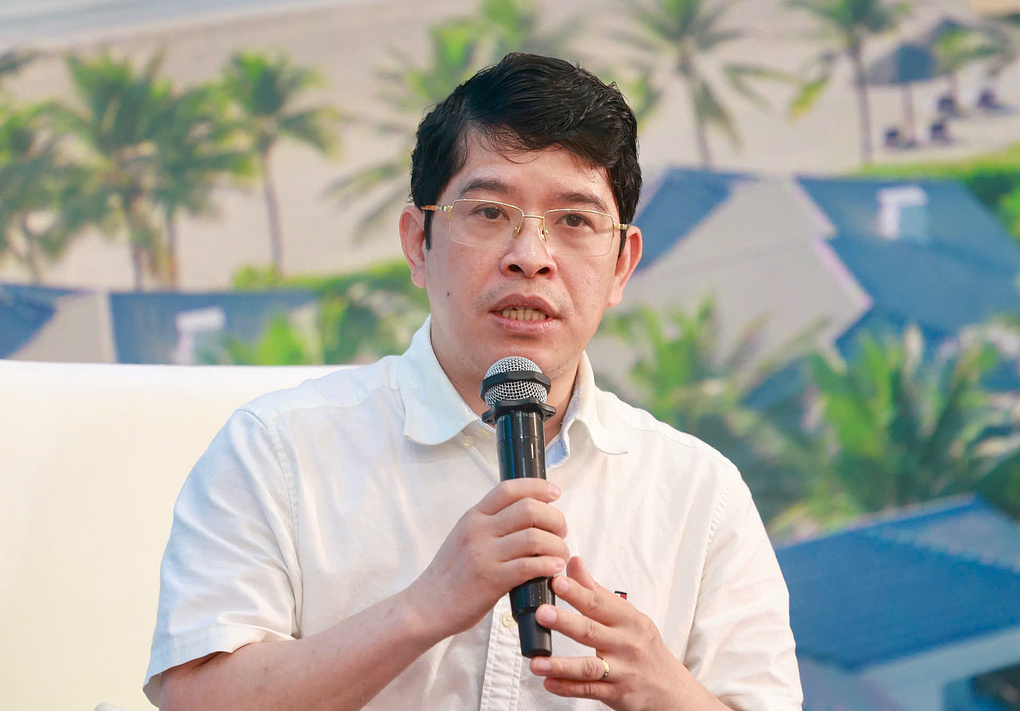
Mr. Nguyen Dinh Tho, Deputy Director of the Institute of Strategy and Policy on Agriculture and Environment (Ministry of Agriculture and Environment), stated that the benefit-sharing mechanism in resort projects has directly affected investor confidence recently. In reality, after selling the real estate, many developers continue to collect high annual fees. These fees include operations management, security, infrastructure maintenance, shared amenities usage, branding, and more.
“Many investors buy resort real estate but do not know how much the actual operating costs are, whether the revenue allocation is reasonable, or if the developer decides everything on their own,” Mr. Tho said.
Additionally, the gap regarding the ceiling for operating and management costs of this real estate type also exposes buyers to many risks. Because each developer charges a different rate, ranging from 50,000 to 75,000 VND, or even 100,000 to 150,000 VND per square meter in some places.
Mr. Tho cited an example of a condotel worth several billion VND, where the operating and management costs can reach several million VND per month, forcing the owner to increase the rental price to compensate. Meanwhile, for residential apartments, local authorities have established a ceiling for management fees, such as in Hanoi, where the minimum is 1,200 VND and the maximum is 16,500 VND per square meter.

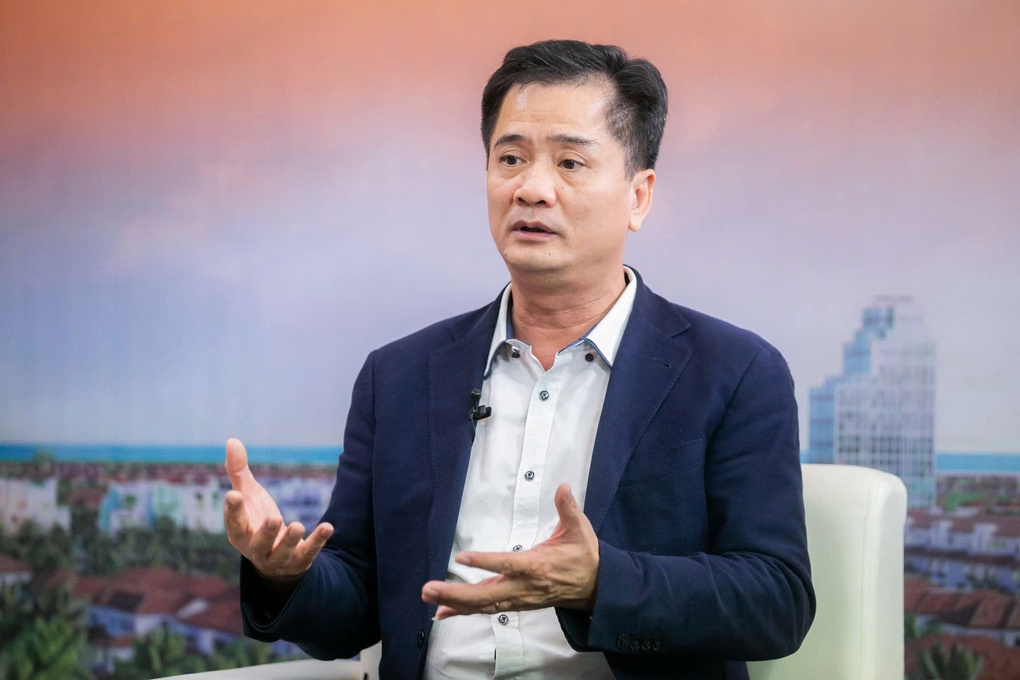
Mr. Nguyen Dinh Tho, Deputy Director of the Institute of Strategy and Policy on Agriculture and Environment, speaking at the seminar on the morning of June 23. Photo: Financial Investment Newspaper
Mr. Nguyen Dinh Tho, Deputy Director of the Institute of Strategy and Policy on Agriculture and Environment, speaking at the seminar on the morning of June 23. Photo: Financial Investment Newspaper
According to the expert, many condotel and resort villa projects currently possess the nature of capital mobilization activities rather than traditional real estate transactions. Investors buy these products with the expectation of receiving profits from future business exploitation, similar to shareholders buying corporate stocks to enjoy dividends and stock price appreciation. However, the mechanisms for information disclosure, governance, and supervision have not closely followed the true nature of this investment type.
Mr. Nguyen Dinh Tho proposed researching investment fund models or similar financial structures to manage capital mobilization for resort real estate products. He gave an example: a project with 100 investors is like an enterprise with 100 shareholders; the developer needs to periodically disclose information, financial reports, audits, and have a public information mechanism similar to the stock market.
“This solution ensures the rights of buyers, protects legitimate businesses, and avoids situations where legal business models are equated with fraudulent behavior,” he said.
On another note, Mr. Phan Duc Hieu, a full-time delegate at the Economic and Financial Committee of the National Assembly, argued that transparency is a mandatory requirement, but it does not mean the State must intervene too deeply in all business activities. Regarding the opinion that a ceiling or rigid regulations on revenue sharing ratios should be applied, Mr. Hieu said this solution could reduce the quality of tourism products.
According to him, a high-end resort cannot have the same operating costs as normal housing. Landscape maintenance, customer service, international service standards, and so on all incur costs. The important thing is not how much the fee is capped at, but ensuring that all costs are public and transparent so that investors have full information before making a decision.
“When transparent information and competition are guaranteed, the market will adjust itself through consumer choices,” he said.

Coastal real estate in Da Nang. Photo: Nguyen Dong
Coastal real estate in Da Nang. Photo: Nguyen Dong
Mr. Hieu recommended solutions to develop professional investment channels for tourism real estate. Instead of just buying and selling assets in the traditional way, investors need more options through investment funds, financial products, or modern capital mobilization models. The goal is to create a market where investors can easily participate, transfer, or withdraw capital, similar to developed financial markets.
According to the first-quarter market report, the Ministry of Construction stated that tourism and resort real estate prices in many localities tend to be stable, without strong fluctuations compared to the previous quarter. For newly launched projects in the quarter, the selling prices set by developers were at a high threshold.
Data from the Vietnam Association of Realtors (VARS) also showed that the resort real estate market movements were more positive compared to the previous year. In the first three months of this year, the market recorded 6,500 primary products, six times higher than the same period last year. The successful transaction rate at newly launched projects reached 45 percent, with more than 2,900 units, seven times higher than the same period.
Even so, Ms. Hoang Thu Hang, Deputy Director of the Housing and Real Estate Market Management Agency (Ministry of Construction), acknowledged that the management mechanism for resort real estate products is still incomplete, especially the form where developers commit to profits or leasebacks.
She believes that in essence, this is a civil relationship between the developer and the customer. Management agencies are researching policy solutions to ensure the legal rights and interests of all parties, while simultaneously increasing supervision mechanisms for the commitments made by businesses.
According to her, the challenge for the tourism and resort real estate market no longer lies in the legal corridor but has shifted to the problem of effective investment and exploitation. Many developers still approach the market with a focus on selling products rather than emphasizing the formation of a sustainable tourism ecosystem. She recommended that developers and investors, when approaching a project, need to carefully research tourism potential, the quality of technical and social infrastructure, as well as advantages regarding airports, seaports, and support services.
“If we just chase the number of projects without calculating the actual exploitation capacity, the investment efficiency will be very limited,” Ms. Hang said.


Leave a Reply