
Artificial intelligence (AI) and blockchain will be applied in land management to automatically update data, monitor planning, and increase transparency.
This content is stated in Decision 1177 of the Prime Minister on adjusting the National Land Use Planning for the 2021-2030 period, with a vision to 2050.
According to the decision, Vietnam will accelerate the construction and operation of a centralized, unified land information system and database from central to local levels in a digital environment. This system will be connected to the national database and related digital platforms to increase management efficiency in the context of growing land use demand.
The Government requires prioritizing the application of AI, machine learning, and blockchain to automate management, ensuring the integrity and traceability of land data. The inspection and supervision of land use planning implementation nationwide will also apply Big Data, spatial modeling, remote sensing technology, satellite imagery, and more. The data will be regularly made public for citizens and businesses to access.
Digital technology helps track fluctuations and provide early warnings for areas where land is used contrary to planning. This data will also serve climate change forecasting, resource management, and environmental protection.

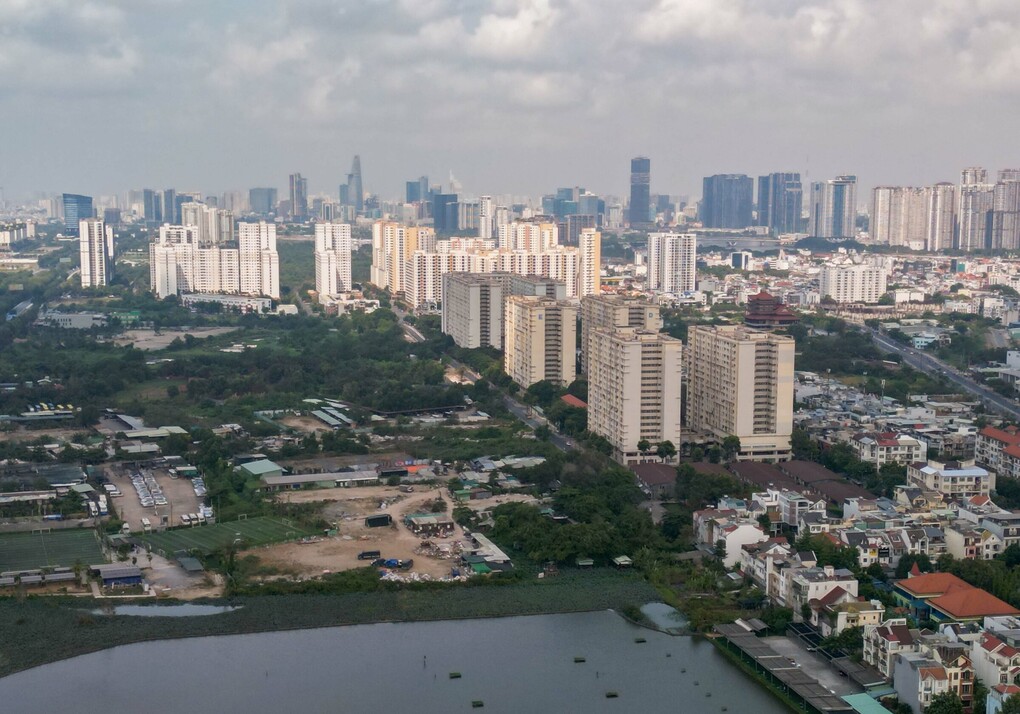
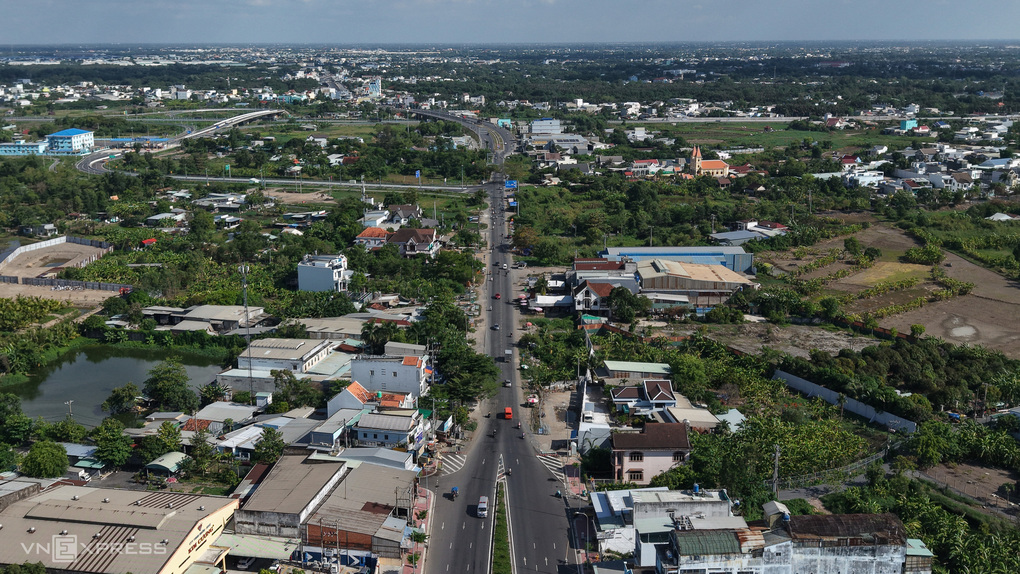
Real estate in the eastern area of Ho Chi Minh City, April 2026. Photo: Quynh Tran
Real estate in the eastern area of Ho Chi Minh City, April 2026. Photo: Quynh Tran
In addition to technological applications, the Government also requires continued review to ensure consistency between national land use planning and sectors and localities. Management agencies will increase inspections of land use, strictly handling acts of pollution, land degradation, and cases of planning violations.
The planning monitoring mechanism will be perfected, accompanied by flexible solutions for arising key national projects not yet included in the planning. At the same time, management agencies will reclaim land and water surface areas allocated to organizations and enterprises that are unused or inefficiently used.
The Government also established orientations for distributing development space across 6 socio-economic regions, associated with the advantages of each locality and economic corridors.
The Northern Midland and Mountainous region will prioritize the protection and restoration of watershed forests, promoting the advantages of minerals, border-gate economy, tourism, and forming an economic corridor connecting Hanoi and international routes.
The Red River Delta is oriented to become a growth pole for innovation, industry, and modern services. Hanoi will develop according to a smart city model, while the Hai Phong – Quang Ninh area will continue to be invested in to become a marine economic center and a gateway for the Northern Key Economic Zone with Lach Huyen International Port.
For the North Central Coast, the planning prioritizes forest protection, improving response capacity to natural disasters and climate change, and developing transport systems, coastal urban areas, ports, and tourism centers.
The South Central Coast and Central Highlands regions are oriented to develop clean energy and nuclear power with economic zones, industrial zones, and an East-West connecting transport network. This region also aims to develop international tourism centers, increase the value of industrial crops and medicinal herbs, and enhance the protection of watershed and protection forests.
The Southeast region continues to be designated to develop Ho Chi Minh City into an international financial center. This area will also form the Moc Bai – Ho Chi Minh City – Cai Mep – Thi Vai industrial-urban chain associated with the Trans-Asian economic corridor, developing the Cai Mep – Thi Vai international transshipment port and Long Thanh airport city.
The Mekong Delta will continue to play its role as a large-scale agricultural production center. The planning also requires developing renewable energy, building regional transport infrastructure, and using land flexibly to adapt to climate change, sea-level rise, and saltwater intrusion.
Phuong Dung



Leave a Reply