
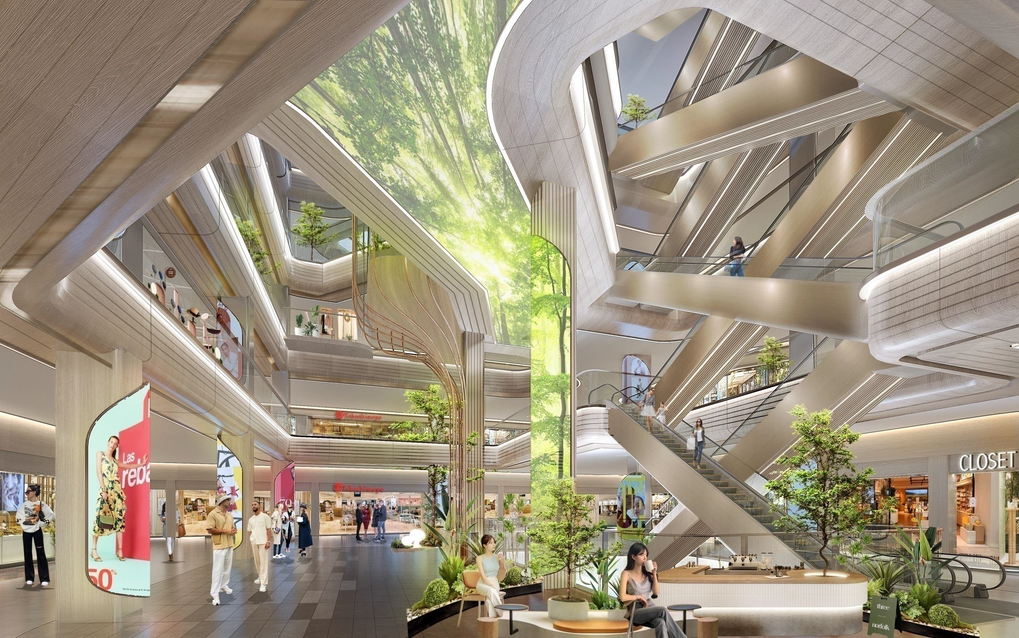
Instead of focusing on scale, many next-generation shopping malls prioritize personalized customer experiences, integrating shopping spaces with discovery, fun, and entertainment activities.
In the report Retail 2026: Trends Shaping the New Consumer Way published in April, Deloitte observes that the experience factor is becoming a new driver of the modern retail industry. When visiting shopping malls, consumers do not just buy products but also seek experiences and amenities that match their emotions.
“Products alone are not enough; retailers are reassessing the value of customer experience – the factor that makes a difference in today’s context,” the Deloitte report states.
Savills Vietnam also suggests that shopping malls integrating diverse lifestyle services and experiences have more advantages in attracting and retaining customers. This aligns with the global trend where modern retail is positioned as a destination for discovery and experience, rather than just performing a pure shopping function.

Perspective of the experience-first shopping space at Westlake Square Hanoi. Photo: Toshin Development
Perspective of the experience-first shopping space at Westlake Square Hanoi. Photo: Toshin Development
In many major cities across Southeast Asia, shopping malls are increasingly active in transforming their models from traditional goods-shopping venues into destinations for experience, culture, and entertainment. Among them, the Icon Siam project in Bangkok is oriented as a tourist destination and a next-generation shopping mall. In addition to retail stores, restaurants, and shopping areas, it integrates a simulated floating market, a riverside space, and Thai cultural events, with a focus on the customer’s discovery experience.
Similarly, the Taikoo Li Chengdu shopping mall in Sichuan (China) focuses on investing in open spaces with architecture that blends traditional and modern elements, rather than creating a sense of scale. Or in Hong Kong (China), K11 Art Mall is one of the pioneering shopping malls for the retail model combining art and lifestyle. The project integrates retail outlets, art exhibitions, and community experiences to create an emotional connection with the younger generation of customers.

Retail space combining art and lifestyle at K11 Art Mall. Photo: K11 Art Mall
Retail space combining art and lifestyle at K11 Art Mall. Photo: K11 Art Mall
Ms. Mai Vo, Director of Retail Services at CBRE Vietnam, observes that new shopping malls are gradually taking shape under a new model and redefining the retail market with a new operating system, focusing on long-term restructuring rather than short-term fluctuations. Besides mega-projects that lean purely toward scale and the mass market, models such as multi-functional complexes, shopping malls focusing on experience, entertainment, and lifestyle, or flagship stores have many advantages for development. In particular, small and medium-sized shopping malls that focus on personalized services will create higher-quality experiences.
According to Ms. Mai, the Vietnamese retail market is entering a new phase of competition, where consumer experience and brand positioning capabilities play an important role for both developers and tenants. Therefore, medium-sized shopping malls following this model still have great appeal with their ability to bring iconic brands and distinct experiences, contributing to building a core customer community.
In Hanoi, the experience-first retail model is gradually taking shape at Westlake Square Hanoi. This is a high-end commercial project featuring Grade A offices and the Hanoi Takashimaya S.C. shopping mall, marking the presence of the famous retail brand from Japan.
Westlake Square Hanoi is positioned as a premium destination, where experience and curation are prioritized over scale. The project is located in the new growth pole of West Lake West, which features synchronized urban planning development, connectivity infrastructure, and a high-end residential community, thereby driving next-generation retail complexes. Phase I of the project consists of a 10-story tower with a total floor area of approximately 43,000 square meters, expected to become operational in the third quarter of 2027.

Instead of focusing on scale and quantity, Westlake Square Hanoi aims for a multi-experience retail space according to Japanese standards. Photo: Toshin Development
Instead of focusing on scale and quantity, Westlake Square Hanoi aims for a multi-experience retail space according to Japanese standards. Photo: Toshin Development
A representative of Toshin Development, the project developer, said that Westlake Square Hanoi inherits space design according to Japanese retail and service standards. From the large-scale food court, fashion and retail brands to the Japanese-standard Onsen complex, everything is carefully curated.
“More than just a place to visit, Westlake Square Hanoi is shaped as a preferred choice, where every experience brings new values and inspiration,” shared the representative of Toshin Development.

Perspective of the interior space of Westlake Square Hanoi. Photo: Toshin Development
Perspective of the interior space of Westlake Square Hanoi. Photo: Toshin Development
In the context of the retail market entering a competitive phase, the experience-based retail model is gradually becoming the mainstream trend. In Hanoi, the launch of Westlake Square Hanoi not only meets the new demands of consumers but also demonstrates the flexible and fresh strategy of developer Toshin Development with the orientation to change the face of the capital’s retail market.

Leave a Reply