
Nearly 30% of Grade A office space in Ho Chi Minh City is over 10 years old, facing pressure to upgrade as tenants increasingly prioritize green, smart, and modern buildings.
The Ho Chi Minh City office market is entering a new phase of screening as many older buildings face the risk of reduced competitiveness against a continuous influx of modern supply entering the market.
According to research by JLL, about 28% of Grade A office space in Ho Chi Minh City is currently over 10 years old, with many buildings put into operation 25-30 years ago. This is the asset group under the greatest pressure as leasing demand shifts toward green, smart buildings with multiple amenities for employees.
Against the backdrop of total office supply in Ho Chi Minh City and Hanoi reaching about 4.1 million square meters, around 35% of Grade A office space has not yet achieved international green certifications. This means many existing offices will have to upgrade in the next few years to retain tenants and maintain their competitive advantage.
This trend is not unique to Vietnam. JLL estimates that about 65% of office buildings globally risk becoming obsolete by 2030 if they are not renovated to meet new standards for environment, technology, and user experience.

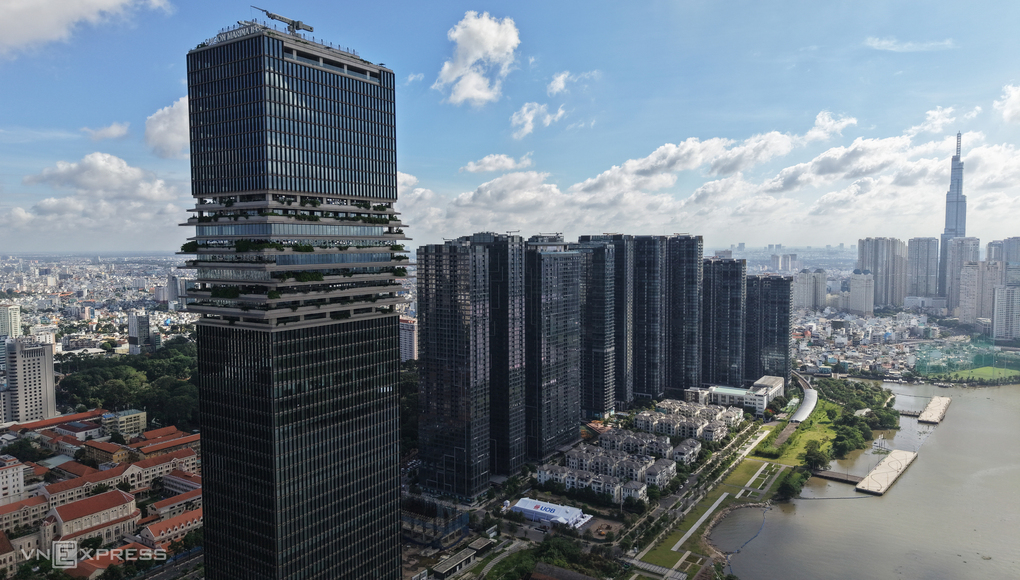
A corner of downtown Ho Chi Minh City with office and commercial buildings. Photo: Thanh Tung
A corner of downtown Ho Chi Minh City with office and commercial buildings. Photo: Thanh Tung
According to experts, the pressure to upgrade comes from both the lifecycle of the building and changes in the needs of office tenants. After about 15 years of operation, many critical systems and management platforms in a building enter a cycle requiring major overhauls. When a building reaches 20-25 years of age, comprehensive renovation becomes almost mandatory if developers want to extend its operational lifespan and maintain asset value.
Meanwhile, the gap between older buildings and new supply is becoming increasingly distinct. According to JLL, about 70% of Grade A office space currently under development in Ho Chi Minh City is designed to green, smart standards, focusing on user experience right from the initial stages.
In contrast, many buildings constructed two decades ago still face limitations in mechanical and electrical system efficiency, air quality, amenity spaces, or energy optimization capabilities. Quite a few projects also struggle to meet requirements for flexible workspaces or integrated modern management systems due to initial design constraints.
According to Ms. Stephanie Dinh, Head of Project and Development Services at JLL Vietnam, ESG is gradually becoming the new standard for the office market rather than just a competitive advantage. Buildings that invest in energy efficiency, operational technology, and user health generally attract tenants better, maintain more stable rental rates, and are able to preserve asset value in the long term.
Mr. Troy Griffiths, Deputy Managing Director of Savills Vietnam, also noted that green real estate is no longer just an encouraged trend but has become a requirement for many international businesses, especially the FDI sector.
According to him, real estate is also part of the indirect emissions (Scope 3) that many global corporations must control to fulfill their emission reduction commitments. This causes office selection standards to change faster than in the past.
In fact, many developers have begun renovating older buildings to keep up with this trend. A series of projects such as Me Linh Point Tower, mPlaza, and Vincom Center Tower, after upgrading along ESG guidelines, have all improved their ability to attract tenants while maintaining rental rates higher than the market average.
According to JLL, buildings with green certifications and clear emission reduction roadmaps currently record rental rates about 15-30% higher than the market average. Meanwhile, upgrade costs typically account for only about 1-7% of the total asset value if focused on key areas. This investment not only helps reduce operating costs but also extends the operational lifespan and maintains real estate value.
According to experts, the Ho Chi Minh City office market is shifting from location-based competition to asset quality-based competition. During a period when new supply is continuously entering the market, renovating existing buildings is no longer merely a maintenance activity but has become a repositioning strategy to retain tenants and preserve investment value.
The market’s new development cycle will no longer be a race to build more supply but a competition over building quality and the ability to meet sustainable development standards. Buildings that adapt early to this trend will continue to hold advantages in occupancy rates and rental prices, while slower-to-transition asset groups risk being left behind, even if they possess prime locations.
Phuong Uyen



Leave a Reply