
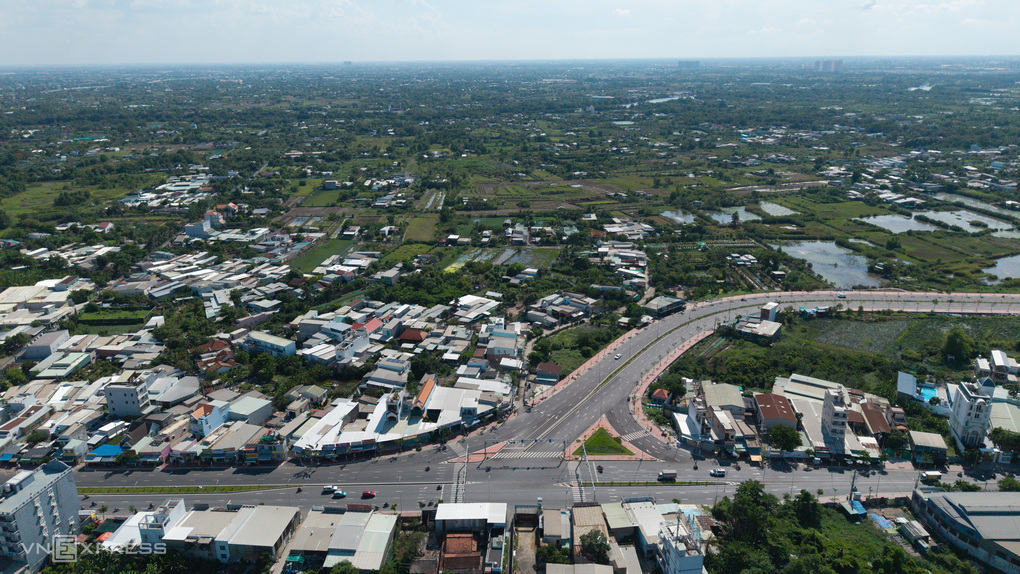
Compared to the same period last year, the primary selling price of landed property in Ho Chi Minh City decreased by nearly 30 percent as new supply mainly came from suburban projects with lower prices than the inner city, according to CBRE.
According to CBRE’s second-quarter report, the average primary price of the landed property segment (villas, townhouses) in Ho Chi Minh City reached about 216 million VND per square meter of land, down 3 percent compared to the previous quarter and 29.5 percent lower than the same period last year.
The decline was mainly driven by changes in the supply structure. According to CBRE, in the past quarter, Ho Chi Minh City recorded 1,934 newly launched landed property units, all belonging to a mega-urban area in Hoc Mon. With a price of about 127 million VND per square meter of land, significantly lower than the average of existing projects in the East area (200-300 million VND per square meter), this new supply dragged down the average selling price of the entire market.
JLL Vietnam also recorded a similar trend. In the first half of the year, the market had about 4,100 newly launched landed property units, mainly in non-central mega-urban areas such as The Global City, Senturia An Phu, and Vinhomes Saigon Park. This lower-priced new supply dragged the average primary price down to about 195 million VND per square meter of land, a 56 percent decrease compared to the same period last year.

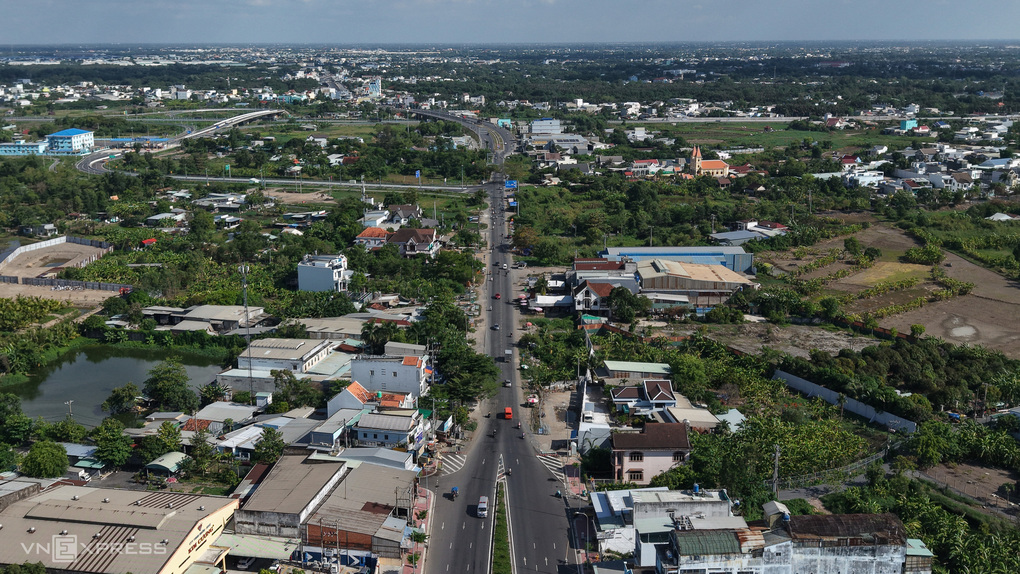
Landed property in the Western area of Ho Chi Minh City, May 2026. Photo: Quynh Tran
Landed property in the Western area of Ho Chi Minh City, May 2026. Photo: Quynh Tran
The above developments show that the price level of landed property in Ho Chi Minh City is being reset according to the new supply structure, as launched projects are no longer concentrated in the high-priced inner-city areas but have shifted to large-scale suburban mega-cities with more accessible prices.
Not only did the price level change, but market liquidity also improved thanks to the recovery in supply. CBRE stated that the absorption rate in the second quarter reached about 40 percent, with transactions coming from both new supply and inventory of previously launched projects.
Meanwhile, JLL recorded about 4,250 successful transactions in the first half of the year, mainly concentrated in well-planned mega-urban areas or residential areas with complete utility systems. In the context of remaining high interest rates, extended payment schedules and financial support policies from developers continue to be key factors helping maintain purchasing power.
According to Ms. Duong Thuy Dung, Executive Director of CBRE Vietnam, although supply and demand are improving, buyers remain cautious due to inflationary pressures, high interest rates, and global economic fluctuations.
Unlike previous growth cycles, buyers now prioritize financial safety, limit leverage, and focus on projects with transparent legal status, real utility value, and long-term growth potential. This keeps cash flow concentrated on projects with favorable locations, synchronous infrastructure, and proper development.
From a market perspective, Ms. Le Thi Huyen Trang, General Director of JLL Vietnam, believed that promoting infrastructure investment and implementing new land policies are expanding the development space of Ho Chi Minh City, creating momentum for supply and capital flows to continue shifting from the central area to new growth corridors.
According to her, the process of urban development linked to the metro system, Ring Road 3, and inter-regional connecting routes will lay the foundation for a new development cycle of the market, while promoting large-scale projects in the East, South, and adjacent areas.
CBRE forecasts that the supply of landed property will continue to improve in the coming time as many mega-cities are deployed. The firm estimates the market will see about 6,000 newly launched units in 2026 and could exceed 15,000 products by 2028. The increased supply is expected to gradually alleviate the multi-year scarcity while providing more choices for owner-occupiers and long-term investors.
Phuong Uyen



Leave a Reply