
Apartment investors lower profit expectations
Once expecting to make billions of dong in profit from selling his apartment, Mr. Hung now accepts cutting his expectations by half to exit the market.
Four months ago, Mr. Hung listed his two-bedroom luxury apartment for sale at 9.4 billion VND. He bought the apartment in late 2023 for around 8 billion VND, including 2 billion VND in bank loans. After accounting for loan interest, taxes, fees, and other incurred costs, he expected to make nearly one billion VND in profit.
However, after months of failing to find a buyer, he was forced to lower the asking price. It dropped from 9.4 billion VND to 9.2 billion VND, and then to 8.9 billion VND. His expected profit also shrank from nearly one billion VND to around 700 million VND, and then further down to about 500 million VND.
“If it were two years ago, someone would have closed the deal at this price immediately. Now, buyers have too many options, making it much harder to sell,” he said, adding that this profit margin is much lower than bank savings interest calculated on the invested capital.
Not only are investors looking to exit the market lowering their profit expectations, but those buying in now are also changing their strategies. Ms. Lan, an investor in Ho Chi Minh City, said that previously, whenever she bought an apartment, she aimed to resell it after two to three years with a 15-20% markup. However, for the apartment she bought early this year, she only expects a price increase of about 8-10% over the next 3 to 5 years.
While waiting for the asset to appreciate, the apartment will be rented out to generate cash flow, offsetting opportunity costs and reducing the pressure to sell during unfavorable market conditions.
“If the apartment brings in around 18-20 million VND in rent each month, I still have cash flow while waiting for the market to rise. Expecting tens of percent in profit after just one or two years like before is no longer realistic,” she said.

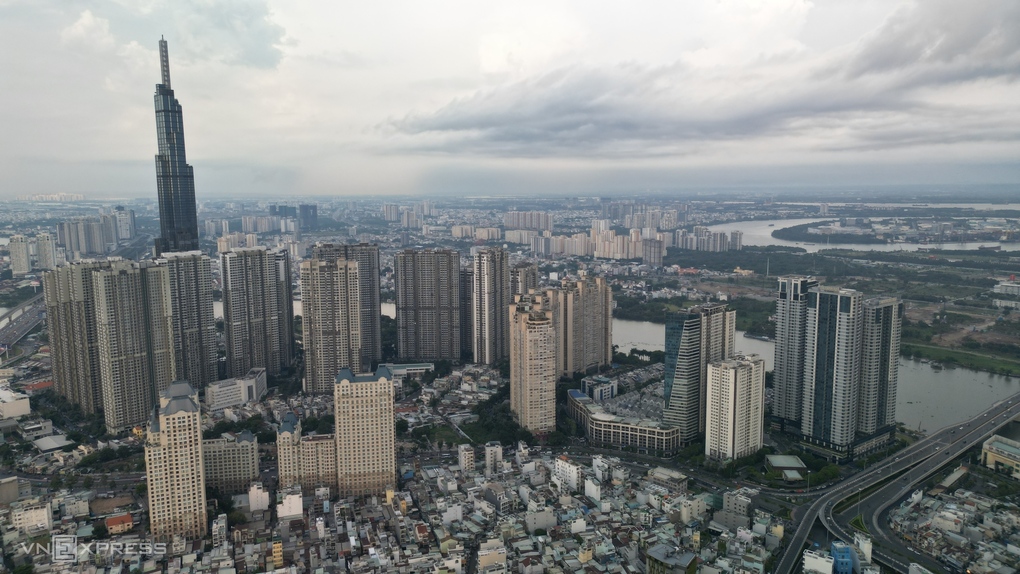
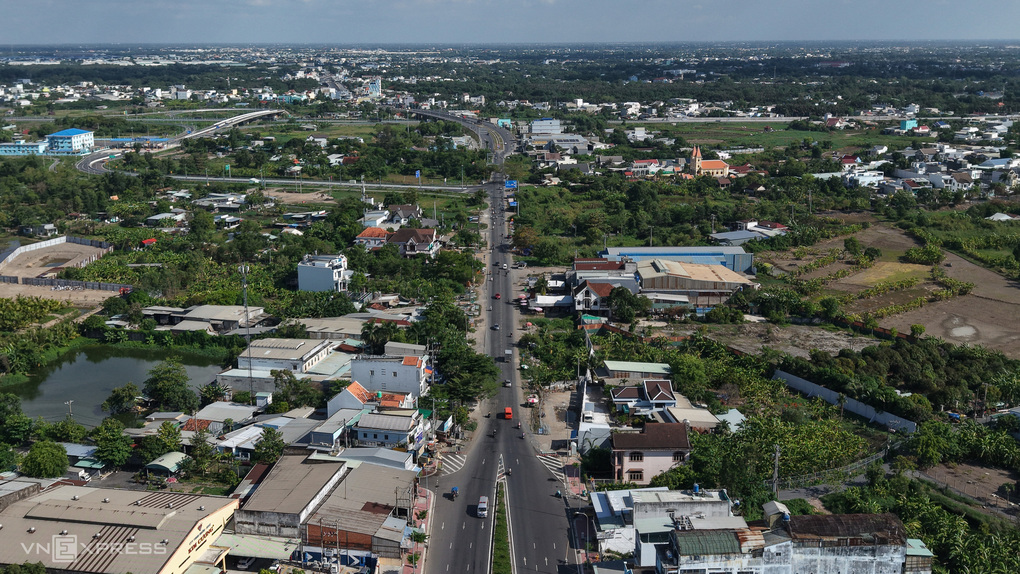
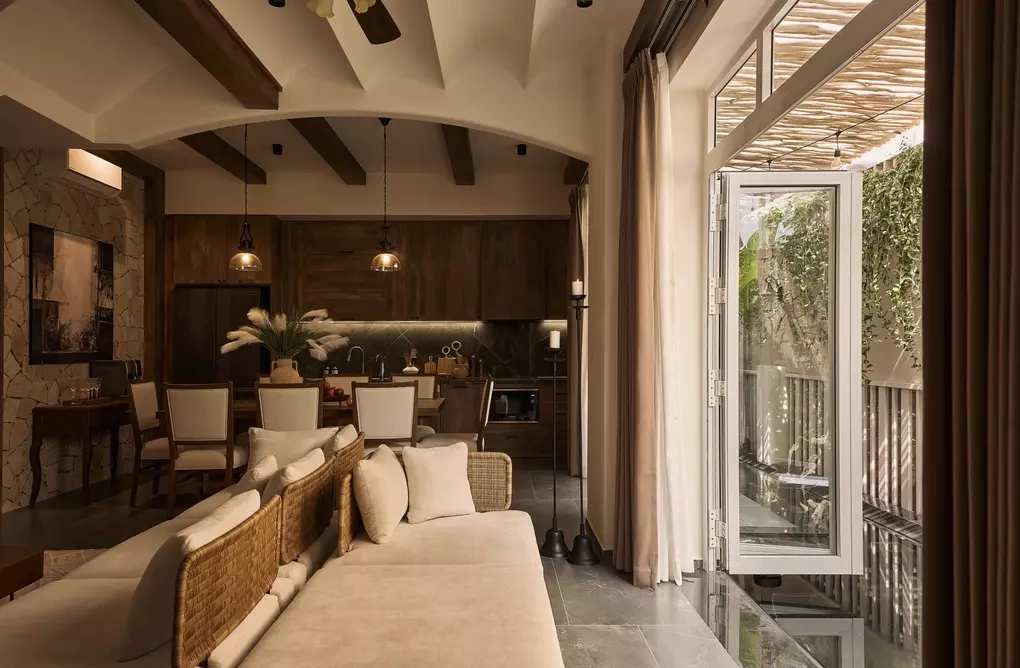
Real estate in the eastern area of Ho Chi Minh City, April 2026. Photo: Quynh Tran
Real estate in the eastern area of Ho Chi Minh City, April 2026. Photo: Quynh Tran
Following a period of hot growth since 2023, the Ho Chi Minh City apartment market is gradually cooling down. More abundant primary supply offers buyers more choices, while placing heavy competitive pressure on the resale market. This has forced many investors to lower their profit expectations to increase transaction chances.
Data from CBRE Vietnam shows that the growth rate of secondary apartment prices in Ho Chi Minh City is slowing down. In the second quarter alone, the growth rate fell by more than 6 percentage points compared to the same period last year. While secondary apartment prices increased by an average of over 10% per quarter during the 2024-2025 period, the current typical increase is only around 2%.
A report by Avison Young Vietnam also noted that the secondary market has begun to adjust. Prices of luxury apartments have decreased by about 5-8% from their peak, while liquidity continues to polarize. New luxury projects have an absorption rate of below 30%, while the mid-end segment peaks at only around 35%.
Ms. Duong Thuy Dung, Executive Director of CBRE Vietnam, said that reselling apartments with the expected profit is now more difficult than before. According to her, when price growth momentum weakens, investors are forced to reduce profit expectations if they want to improve liquidity.
“In some areas, after deducting holding costs, the profitability of flipping apartments is only equivalent to, or even lower than, savings interest rates,” she said.
According to her, reselling apartments is currently harder because home loan interest rates remain around 9.2%, while primary supply has risen sharply with many projects priced at 60-80 million VND per square meter along with promotional policies. Buyers therefore have more options, forcing secondary investors to lower their profit expectations to improve liquidity.
Agreeing, Mr. David Jackson, CEO of Avison Young Vietnam, assessed that after a hot growth phase, the apartment market is entering a more sustainable investment cycle. Instead of expecting large profits in the short term, many investors are starting to pay more attention to the ability to generate cash flow from rentals, project operation quality, and potential price appreciation in the medium and long term.
He evaluated that the pressure of capital costs, high interest rates, and strong promotional programs from the primary market are gradually forcing many secondary owners to adjust selling prices to increase transaction feasibility. Secondary apartment prices have currently decreased by a common range of 2-6% compared to the previous quarter, mainly for products held by investors using financial leverage.
Besides the price factor, the improvement of transport infrastructure is also changing housing preferences. As connection routes between Ho Chi Minh City and satellite cities are accelerated, buyers are willing to move to areas further from the center in exchange for more accessible prices.
Nevertheless, research agencies believe that a widespread price reduction trend has not yet appeared in the market. The most obvious change is investor expectations. As supply increases and buyers have more choices, the more common strategy is shifting to long-term holding and exploiting rental cash flow instead of just waiting for price appreciation to resell.
CBRE forecasts that greater Ho Chi Minh City will have about 43,000 apartments launched for sale in 2026 and will continue to maintain a large supply in the coming years. As the market enters a phase of higher competition, project quality, utility value, and cash flow generation capacity will become the deciding factors, rather than just relying on short-term price appreciation expectations.
Phuong Uyen


Leave a Reply